

Minority Leader Alexander Afenyo-Markin has warned that GoldBod could become a major scandal, urging the Ghana Gold Board to exercise caution amid growing scrutiny of its operations and the financial implications of the country’s domestic gold purchase programme.
The Effutu Member of Parliament issued the warning while commenting on revelations contained in a recent International Monetary Fund (IMF) report concerning losses recorded under the Bank of Ghana’s Domestic Gold Purchase Programme, which is implemented through GoldBod.
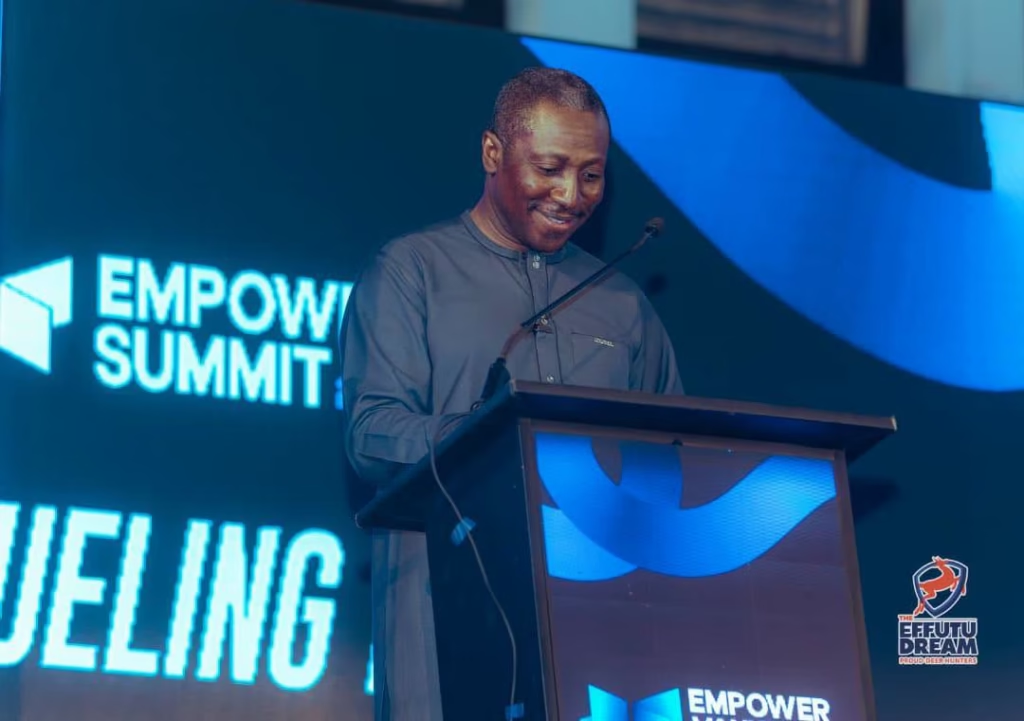
“GoldBod is a very big scandal awaiting us. There are things we know that they don’t know. They should be careful,” Mr Afenyo-Markin warned.
Afenyo-Markin raises concerns over GoldBod operations
The Minority Leader suggested that there could be aspects of GoldBod’s operations that are not currently known to the public.
He cautioned the institution’s management against becoming complacent because of its current position, stressing the need for greater prudence in the management of its activities.
His comments come at a time when GoldBod is facing increased attention over the financial performance of the government’s gold purchasing programme.
The Minority caucus has also intensified its scrutiny of the programme and its potential impact on Ghana’s public finances.
IMF report reveals higher programme losses
The warning follows revelations in IMF Country Report No. 26/213, which indicates that losses associated with the Domestic Gold Purchase Programme in 2025 were substantially higher than the US$214 million figure previously reported.
According to the IMF, the significant expansion of the programme during 2025 resulted in losses exceeding US$1.7 billion, equivalent to approximately 1.5% of Ghana’s Gross Domestic Product.
The revelation has generated further debate over the financial sustainability of the programme and the risks associated with GoldBod’s operations.
GoldBod faces growing scrutiny
GoldBod was established as a key institution in Ghana’s efforts to formalise the gold trading sector and strengthen the country’s management of its gold resources.
However, the scale of the losses cited in the IMF report has intensified questions about the financial implications of the domestic gold purchasing strategy.
The figures have also triggered differing interpretations from economic commentators and government-linked officials.
Professor Ebo Turkson, for instance, has disputed claims that GoldBod itself incurred a GH¢1.7 billion loss, arguing that the IMF figures require proper interpretation and should not automatically be attributed directly to GoldBod.
The contrasting positions have added to the debate over how the programme’s financial performance should be assessed.

Minority demands caution
For Afenyo-Markin, the latest developments demonstrate the need for GoldBod’s management to proceed carefully.
His warning suggests that the Minority believes there may be additional issues surrounding the institution that could emerge if its operations are not properly managed.
The controversy is likely to fuel further parliamentary and public scrutiny of GoldBod, particularly regarding its financial transactions, gold purchasing activities and relationship with the Bank of Ghana.
As debate over the programme continues, attention is expected to remain focused on the actual financial exposure to the state and whether the government’s domestic gold purchasing strategy can deliver its intended economic benefits without creating significant fiscal risks.