
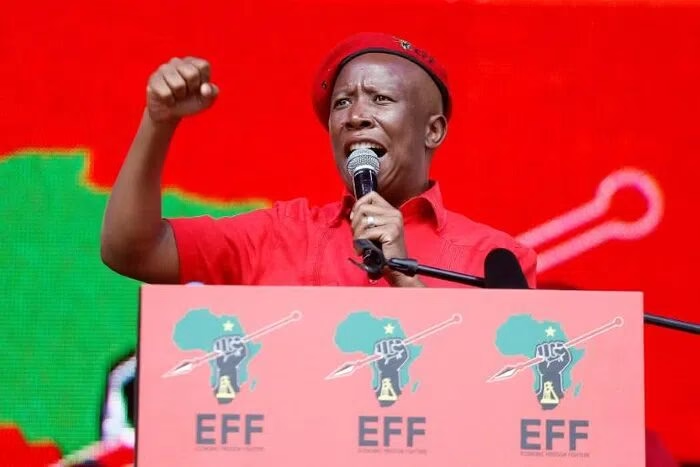
South African opposition leader Julius Malema has been sentenced to five years in prison after being found guilty of illegal possession of a firearm and discharging it in a public space, in a case that has drawn significant attention across the country.
The ruling was delivered at an East London court by Magistrate Twanet Olivier, who concluded that Malema’s actions constituted a deliberate violation of South Africa’s firearm laws.
The conviction relates to a 2018 incident during the fifth anniversary celebrations of the Economic Freedom Fighters in the Eastern Cape, where video footage showed him firing what appeared to be a semi-automatic rifle into the air.
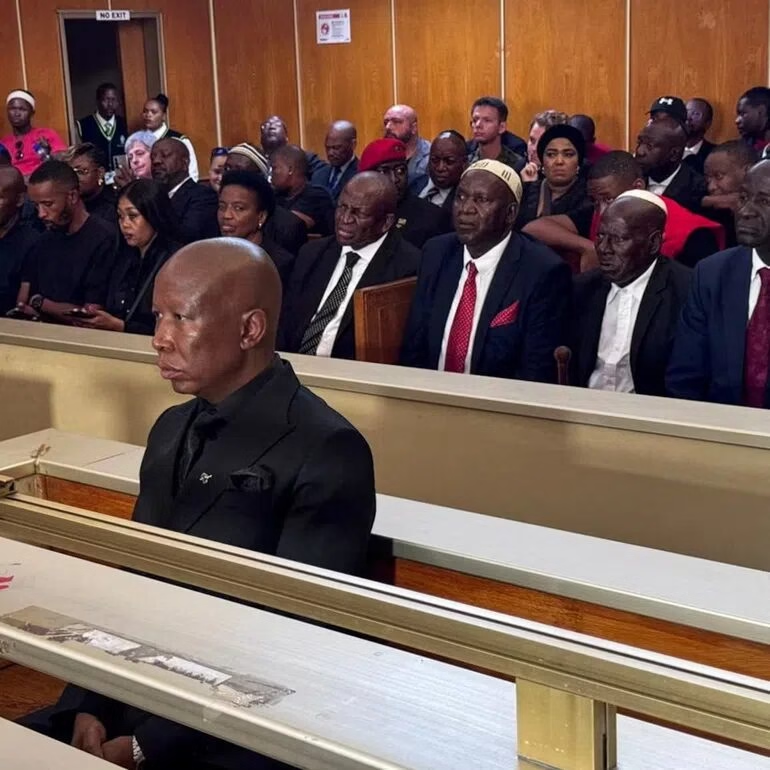
Malema, who appeared in court dressed in a dark suit and red tie, showed little visible reaction as the sentence was handed down.
He had been facing multiple charges, including unlawful possession of a firearm and ammunition, reckless endangerment, and the discharge of a weapon in a public setting.
During the trial, Malema argued that the firearm did not belong to him and suggested that the act was intended to energise supporters at the political gathering.
However, the court rejected this defence, ruling that his conduct was unlawful and posed a risk to public safety.
The prosecution of the case originated from a complaint filed by AfriForum after footage of the incident circulated widely online, sparking public debate about political conduct and adherence to the law.
Following the sentencing, Malema’s legal team moved quickly to file an appeal, seeking to challenge both the conviction and the sentence. The appeal is also aimed at suspending his imprisonment while further legal proceedings take place.
The case is expected to move through higher courts, potentially reaching the Constitutional Court of South Africa.
The conviction carries potential political consequences, as it may affect Malema’s status as a Member of Parliament and his leadership of the EFF, one of South Africa’s most prominent opposition parties.
Supporters of the party gathered outside the courthouse during the proceedings, demonstrating solidarity with their leader.
In remarks after the ruling, Malema struck a defiant tone, telling supporters that imprisonment or even death would not deter his political mission.
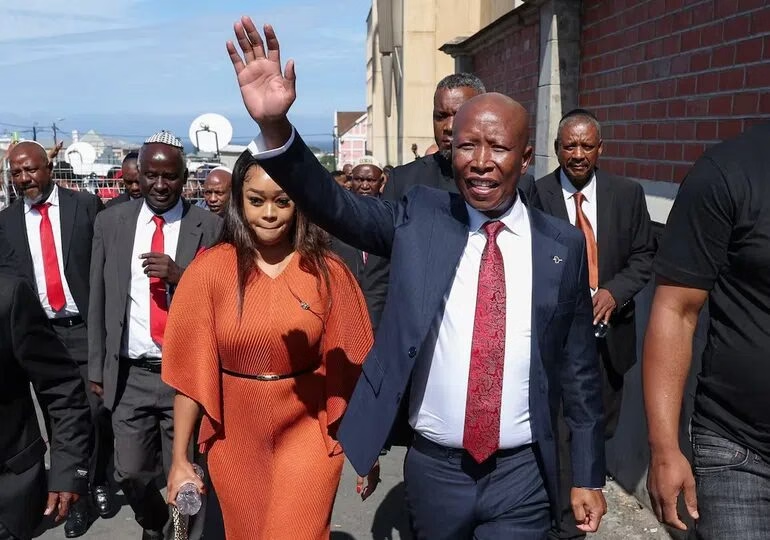
“Going to prison or death is a badge of honour,” he said, adding that he and his movement would not retreat in the face of adversity.
Malema’s political journey has been marked by both influence and controversy. A former leader within the youth wing of the African National Congress, he later broke away following internal disputes to establish the EFF, positioning himself as a vocal advocate for economic transformation and social justice in South Africa.
The case has reignited discussions around political accountability, the rule of law, and the responsibilities of public figures during mass gatherings.
As the appeals process unfolds, the final outcome will be closely watched both within South Africa and across the continent, given Malema’s prominence in African politics.
For now, the sentencing represents a significant legal and political moment, with implications that could extend far beyond the courtroom.