|
Getting your Trinity Audio player ready...
|
Veteran Ghanaian highlife musician Amandzeba Nat Brew has strongly rejected suggestions that highlife music is dead, insisting that the genre remains an important cultural asset that continues to receive global recognition.
Speaking on The Upside Down Show on Channel One TV with Frema Adunyame on Sunday, May 31, the celebrated musician argued that the recent recognition of highlife by UNESCO proves the genre is still relevant and influential.
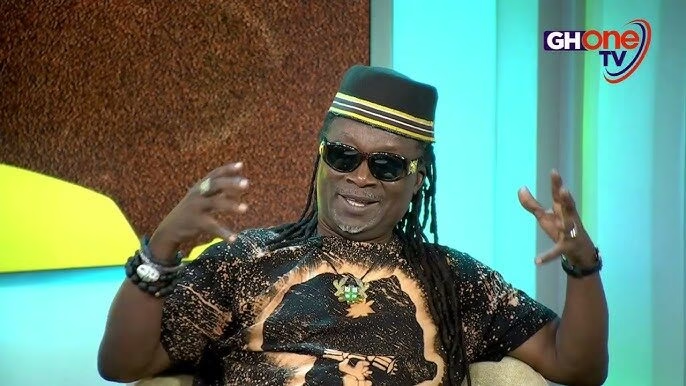
According to Amandzeba, it makes little sense for anyone to describe highlife as extinct when an international cultural body such as UNESCO continues to acknowledge its significance.
“If it is dead, you think UNESCO would adopt it?” he questioned.
The highlife icon explained that the challenge facing the genre is not a lack of quality or public interest. Instead, he believes the issue lies in how music is promoted and consumed in modern times.
Amandzeba observed that today’s music industry is heavily driven by commercial trends, resulting in songs that enjoy brief popularity before quickly fading from public memory.
“Right now, music is like fast food. Popcorn music—it comes, its fragrance is gone, and that’s it,” he stated.
Despite his concerns, the musician was quick to clarify that artistes should not be blamed for the changing landscape. Rather, he pointed to media houses, advertisers, and content creators as key stakeholders who must do more to support and promote indigenous Ghanaian music.
According to him, many local productions continue to rely heavily on foreign music, often at the expense of Ghana’s rich musical heritage.
He expressed concern about the growing trend of using international songs in advertisements and media productions, arguing that such practices deny local musicians opportunities while promoting foreign cultures over Ghanaian creativity.
Amandzeba also warned that excessive use of foreign music could expose businesses and media organizations to copyright issues and royalty claims from international rights holders.
“If you are advertising a product and the soundtrack is from Europe or America, you may think you are being cool today,” he said. “But when those rights holders come for their royalties, do you think you can pay?”
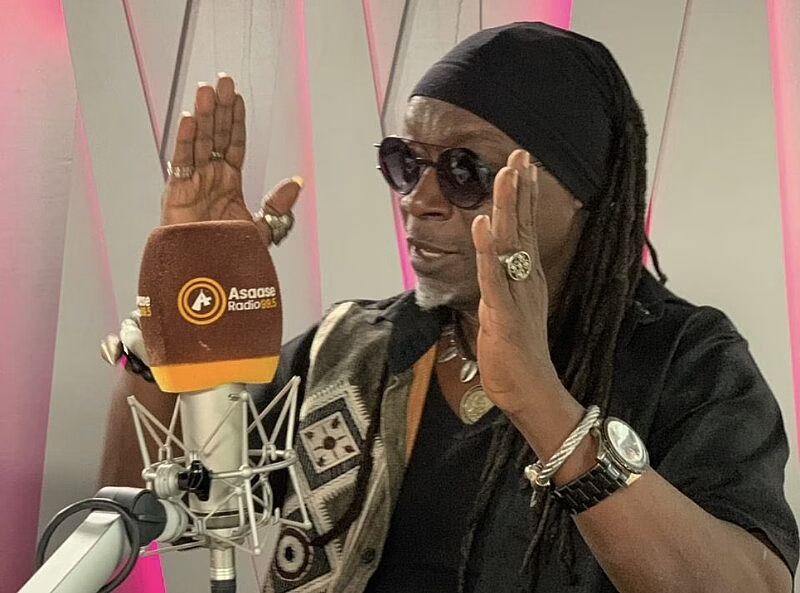
The respected musician called on industry players, advertisers, broadcasters, and policymakers to place greater value on local content. He stressed that Ghana stands to benefit economically and culturally when indigenous music receives the support it deserves.
Amandzeba concluded by urging stakeholders to protect and promote highlife music, describing it as a vital part of Ghana’s identity and heritage that should be preserved for future generations.
His comments have reignited conversations about the future of highlife music and the need to strengthen support systems for local artistes in an increasingly globalized music industry.