
The World Bank has approved a $20 million grant to support Ghana in addressing a looming tomato shortage, a move aimed at strengthening local production and improving food security.
The funding comes at a critical time as concerns grow over declining tomato supply in the country, which has been attributed to a combination of factors including climate challenges, post-harvest losses, and limited access to modern farming inputs.
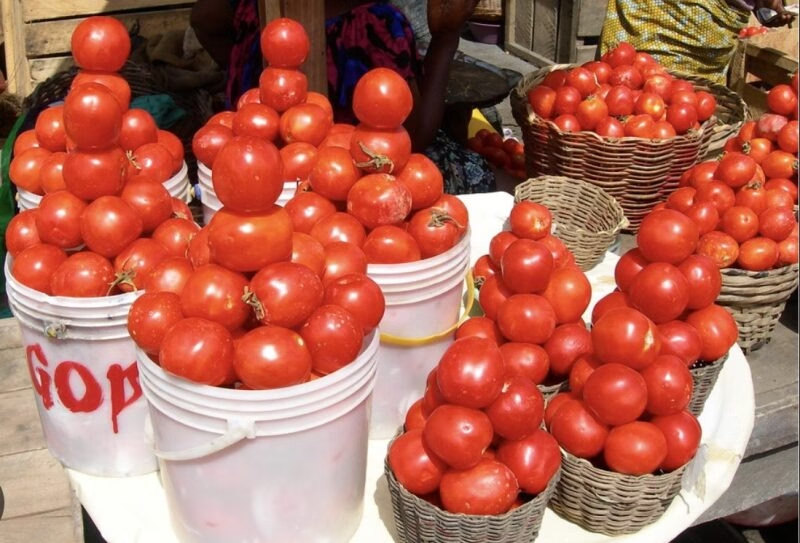
Tomatoes are a staple ingredient in many Ghanaian households and play a key role in the country’s food supply chain. Any disruption in production often leads to price hikes, affecting both consumers and businesses such as food vendors and restaurants.
The grant from the World Bank is expected to support a range of interventions designed to boost tomato production across key farming regions. These include investment in irrigation systems, provision of improved seedlings, and training for farmers on modern agricultural practices.
In addition, part of the funding will go into improving storage and transportation infrastructure to reduce post-harvest losses, which have long been a major challenge in Ghana’s agricultural sector. By minimising waste and improving efficiency, authorities hope to stabilise supply and prevent sharp increases in market prices.
Agriculture experts have welcomed the initiative, noting that targeted investments in key crops like tomatoes can have a significant impact on food security and economic stability. The sector employs a large portion of the population, particularly in rural areas, making such interventions crucial for livelihoods.
The looming shortage has raised concerns among traders and consumers, with some markets already reporting reduced supply and rising prices. Without timely intervention, the situation could worsen in the coming months, placing additional strain on household budgets.
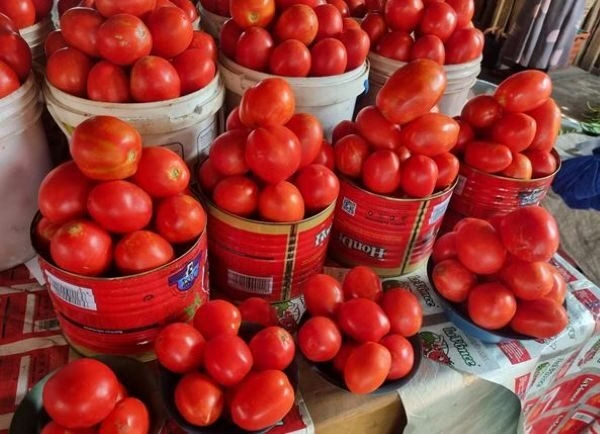
Government officials are expected to work closely with stakeholders, including farmer groups and agricultural agencies, to ensure the effective implementation of the programme. The goal is not only to address the immediate shortage but also to build long-term resilience within the tomato value chain.
The support from the World Bank forms part of broader efforts to strengthen Ghana’s agricultural sector and reduce reliance on imports. By increasing local production, the country can better manage supply shocks and ensure a steady availability of essential food items.
As the programme rolls out, many will be watching closely to see how quickly the interventions translate into improved supply and price stability. For now, the $20 million grant offers a timely boost in the face of a potential food supply challenge.