
The political landscape of Hungary has been dramatically reshaped following a historic election that brought an end to the 16-year rule of Viktor Orbán.
In a stunning upset, opposition leader Péter Magyar secured a decisive victory, marking a turning point in the country’s modern democratic history and signalling a shift in both domestic governance and international relations.
Preliminary results, based on more than 98 percent of votes counted, indicate that Magyar’s Tisza party is on course to win 138 seats in Hungary’s 199-seat parliament, comfortably surpassing the two-thirds majority required to implement constitutional reforms.
Orbán’s ruling Fidesz party, once dominant, is projected to secure just 55 seats, while the far-right Our Homeland party trails with six seats.
Addressing jubilant supporters in Budapest, Magyar declared the outcome a collective victory for the Hungarian people.
His message, delivered along the banks of the Danube River with the parliament building in the background, resonated deeply with citizens who had grown increasingly dissatisfied with years of governance characterised by allegations of corruption, cronyism, and democratic backsliding.
The record voter turnout of nearly 80 percent reflected the intensity of public desire for change.
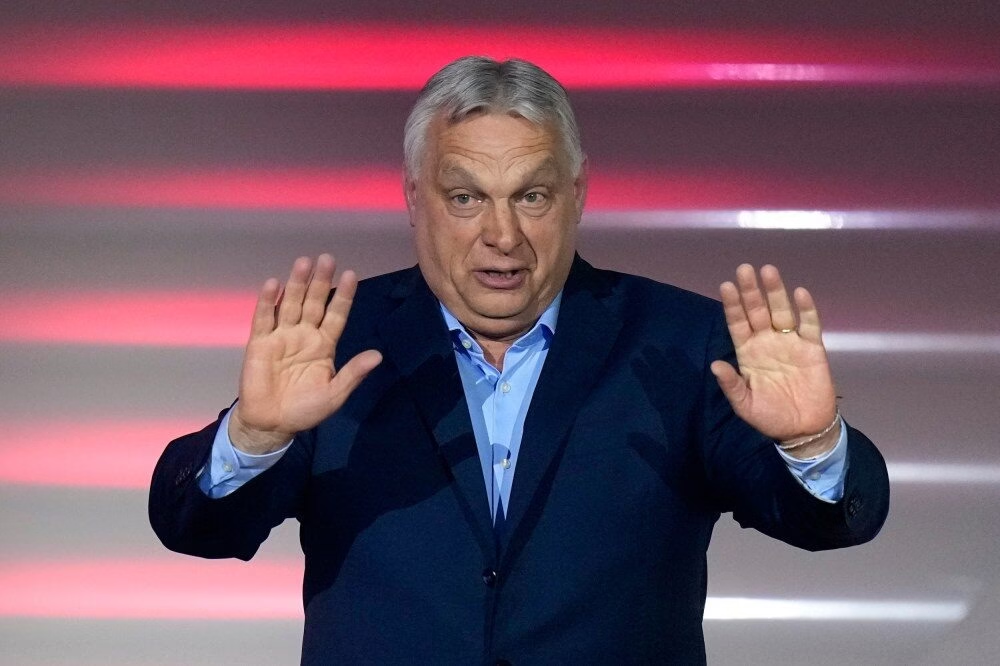
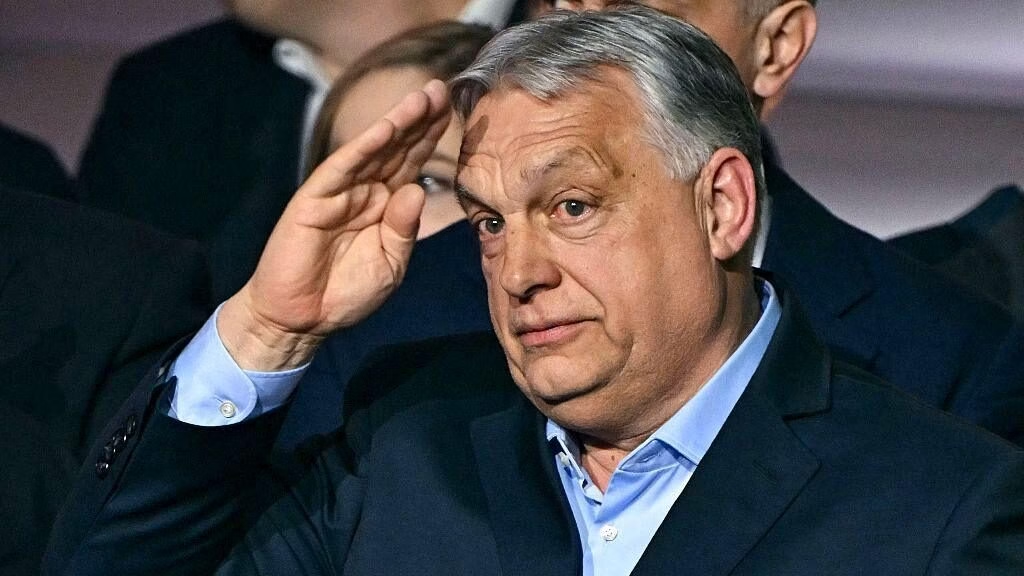
Orbán, who had maintained power through four consecutive election victories, acknowledged defeat in a subdued address to his supporters.
While he thanked millions of Hungarians who stood by him, he described the result as “clear and painful,” signalling the end of an era that had seen Hungary adopt increasingly controversial domestic policies and strained relationships with key European partners.
Magyar’s rise to power is particularly remarkable given his background as a former ally within Orbán’s political circle.
Over the past two years, he built momentum by engaging directly with citizens across towns and villages, presenting himself as a reformist alternative capable of restoring transparency, strengthening democratic institutions, and rebuilding trust in governance.
Central to his campaign was a commitment to reorient Hungary’s foreign policy. Unlike Orbán, who maintained close ties with Russia and often clashed with the European Union, Magyar has pledged to strengthen relations with the EU and Ukraine while distancing the country from Moscow’s influence.
His proposed reforms also include tackling corruption, restoring judicial independence, and dismantling entrenched systems of political patronage.
Scenes of celebration erupted across Budapest following the announcement of the results, with supporters waving flags, sounding car horns, and gathering in large numbers to mark what many described as a historic moment of renewal.
For many Hungarians, the election represents not just a political victory, but a broader hope for accountability, economic reform, and stronger alignment with European democratic values.
As Hungary prepares for a new chapter under Magyar’s leadership, attention now turns to how swiftly and effectively his administration can deliver on its promises.
With a strong parliamentary mandate and widespread public support, the incoming government faces both a significant opportunity and a considerable responsibility to reshape the nation’s future.