
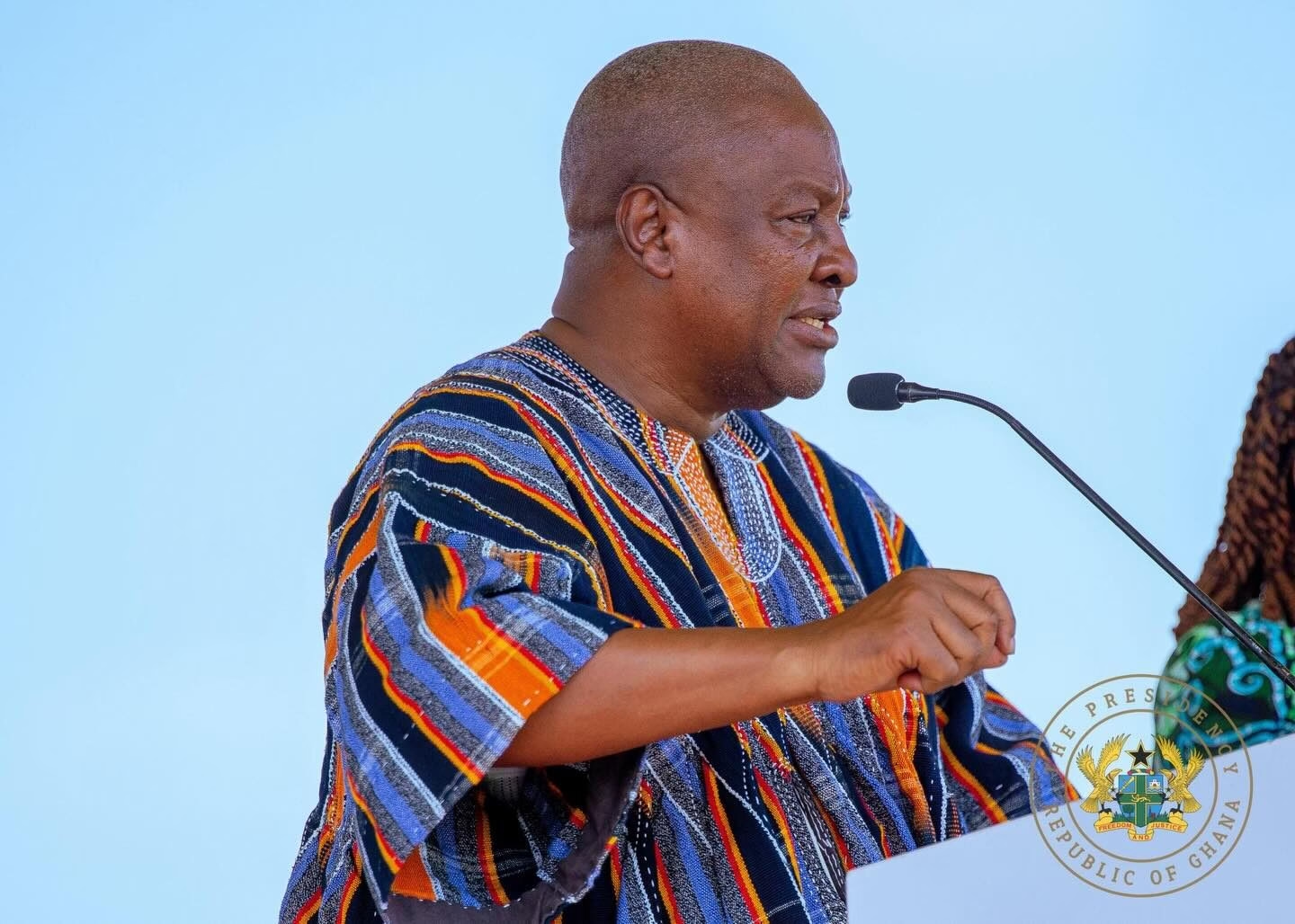
JustRight Ghana has strongly criticised the proposed Human Sexual Rights and Family Values Bill 2025, describing it as “modern-day slavery” and warning that any leader who supports it risks losing the moral authority to advocate for human rights on the global stage.
In a statement issued on April 14, 2026, the group expressed deep concern over the potential implications of the bill, particularly its impact on fundamental freedoms and civil liberties.
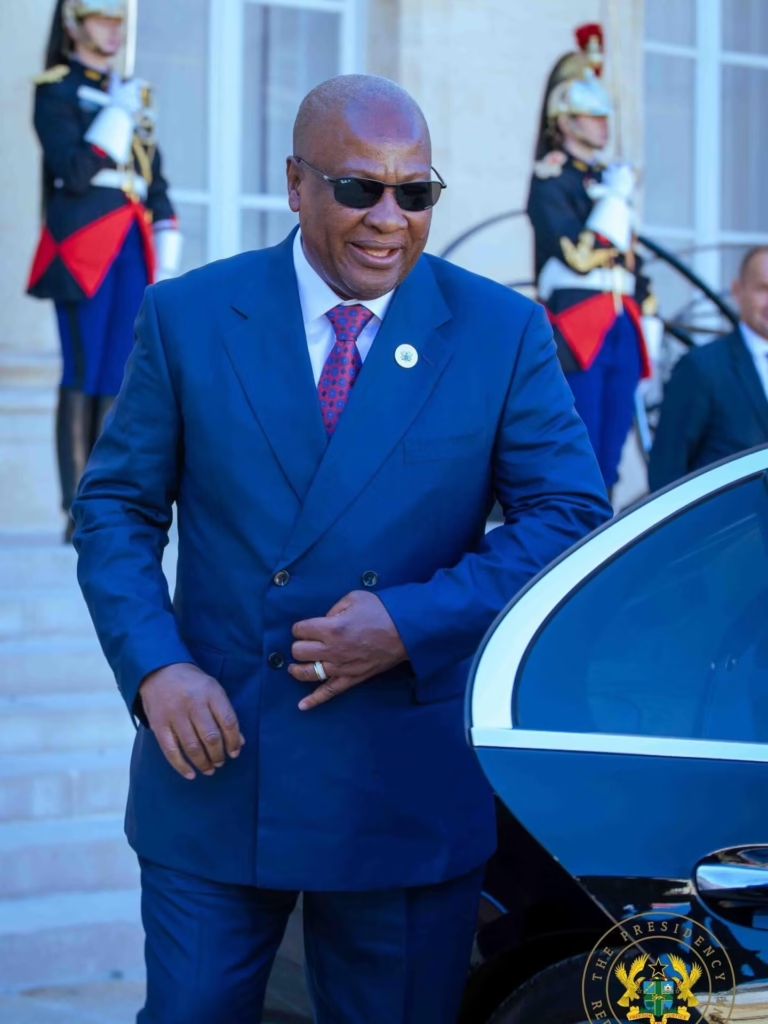
The organisation also took aim at former President John Dramani Mahama following his public indication that he would assent to the bill if it is passed by Parliament of Ghana.
“Anti-LGBTQ legislation is modern-day slavery,” the statement said. “When you support a bill that legitimises the arrest and torture of LGBTQ persons, you forfeit the moral authority to speak about human rights anywhere else in the world.”
The criticism comes in the wake of a petition submitted by the group to Lincoln University in the United States, urging the institution to withdraw an honorary doctorate it had planned to confer on Mr Mahama in March 2026.
JustRight Ghana argued that his position on the bill undermines the values such honours are meant to represent.
At the centre of the debate is the proposed legislation currently before Parliament’s Constitutional and Legal Affairs Committee.
The bill has generated intense national discussion, with supporters arguing that it is necessary to protect Ghanaian cultural and family values, while critics warn that it could undermine basic human rights and freedoms.
JustRight Ghana challenged prevailing narratives around the bill, stating that its effects extend far beyond moral or cultural considerations. According to the group, the legislation could intrude into private spaces and disrupt everyday life.
“Are you aware that the bill invades our privacy in our own homes? Are you aware that the bill criminalises our organisations and the work we do?” the statement questioned, raising concerns about provisions that could compel citizens to report suspected LGBTQ+ individuals to authorities.
The organisation further warned that the proposed law could have far-reaching consequences for various segments of society, including landlords, educators, families, and media practitioners. Individuals who provide support to LGBTQ+ persons or fail to report them could face legal sanctions if the bill becomes law.
Grounding its argument in Ghana’s legal framework, JustRight Ghana cited provisions of the 1992 Constitution, particularly Article 15, which guarantees human dignity, and Article 18, which protects the right to privacy.
The group argued that the bill is inconsistent with these constitutional safeguards.
“These are not imports. These are Ghanaian constitutional guarantees,” the statement emphasised, reinforcing its stance that the opposition to the bill is rooted in domestic legal principles rather than external influence.
The organisation also highlighted Ghana’s obligations under international human rights agreements, including the International Covenant on Civil and Political Rights and the African Charter on Human and Peoples’ Rights, suggesting that the proposed law could place the country at odds with its global commitments.
Despite acknowledging the possibility that the bill could be passed given the current political climate, JustRight Ghana maintained its firm opposition and pledged to challenge the legislation through all available legal avenues.
“We acknowledge that today’s political forces will push for the passage of this bill. What we cannot acknowledge is its longevity,” the statement concluded, signalling an ongoing legal and advocacy battle over one of Ghana’s most contentious legislative proposals.