
|
Getting your Trinity Audio player ready...
|
Substance misuse among Ghanaian youth is becoming an increasing public health concern, with young people reportedly experimenting with prescription medicines, recreational substances, dangerous mixtures and sexual enhancement products, pharmacist and public health advocate Dr George Anagli has warned.
Speaking in an exclusive interview with Pulse Ghana, Dr Anagli identified substance misuse and the inappropriate use of sexual enhancement products as two growing trends that could have serious consequences for the health and future of young people.

“If I had to identify two growing concerns, they would be substance misuse and the increasing misuse of sexual enhancement products among young people,” he said.
Substance misuse among Ghanaian youth raises concern
Dr Anagli said more young people are experimenting with prescription medicines, recreational substances and potentially dangerous combinations.
He noted that some individuals combine different substances with energy drinks and other stimulants in an attempt to achieve particular feelings or improve their performance.
The pharmacist warned that such behaviour could expose young people to addiction and other serious health complications.
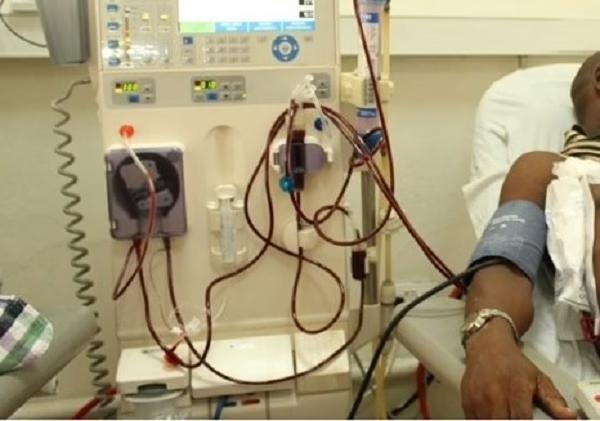
“This trend is deeply worrying because these substances can lead to addiction, affect mental health, damage vital organs such as the liver and kidneys, and ultimately limit a young person’s potential and future opportunities,” he cautioned.
According to Dr Anagli, the growing accessibility of information and products online has also made it easier for young people to encounter substances without fully understanding their risks.
Sexual enhancement products becoming a concern
The second issue identified by Dr Anagli is the growing use of sexual enhancement products among young adults who may otherwise be healthy.
He said misinformation has contributed to the perception among some young people that they require sexual enhancement products to perform sexually, even when there may be no underlying health condition.
Some users reportedly turn to unregulated herbal preparations, unknown mixtures or medicines without knowing exactly what they contain.
Dr Anagli warned that the health consequences could be severe depending on the substances involved.
“Depending on what they contain, these products can have serious health consequences, including harmful effects on the heart, liver, and kidneys, especially when taken indiscriminately or in combination with other substances,” he said.
Misinformation and social media fuel risky choices
Dr Anagli believes misinformation, peer pressure and misleading advertising are significant factors driving both trends.
He expressed concern that some young people are increasingly making health-related decisions based on information encountered on social media rather than consulting qualified healthcare professionals.
“What concerns me most is that both of these issues are being fuelled by misinformation, peer influence, and misleading advertising, particularly on social media,” he said.
The widespread promotion of unregulated health products online can make it difficult for consumers to distinguish between legitimate medical information and misleading claims.
Dr Anagli calls for stronger public education
Dr Anagli stressed that addressing substance misuse among Ghanaian youth requires more than enforcement.
He called for sustained public education, stronger regulation of misleading health claims and greater involvement from parents and communities.
He also urged more healthcare professionals to engage young people directly on digital platforms where they increasingly consume information.
“I believe the solution goes beyond enforcement. We need sustained public education, stronger regulation of misleading health claims, greater parental and community involvement,” he said.
He added that young people deserve accurate and accessible health information that enables them to make informed decisions.
Protecting Ghana’s youth is a national responsibility
Dr Anagli said he has begun using his platforms to educate the public about the risks associated with substance misuse and inappropriate use of sexual enhancement products.
He also expressed his willingness to collaborate with healthcare professionals, organisations and policymakers to expand public education efforts.
The pharmacist emphasised that protecting young people’s health should be viewed as an investment in Ghana’s future.
“Protecting the health of our young people is not just a healthcare responsibility. It is an investment in Ghana’s future.”
His concerns highlight the need for stronger youth-focused health education, responsible digital communication and better regulation of health-related advertising.
As access to medicines, supplements and information continues to expand, ensuring that young Ghanaians have reliable guidance could be critical to preventing harmful choices and protecting their long-term wellbeing.