|
Getting your Trinity Audio player ready...
|
Ghanaian singer and rapper Edem has opened up about some of the stereotypes and challenges he faced as an Ewe artiste after breaking into the mainstream music scene in 2009 following the release of his debut album.
Speaking in an interview with Headless YouTuber, the award-winning musician disclosed that despite his success, he constantly encountered obstacles and subtle forms of discrimination tied to his ethnic background.
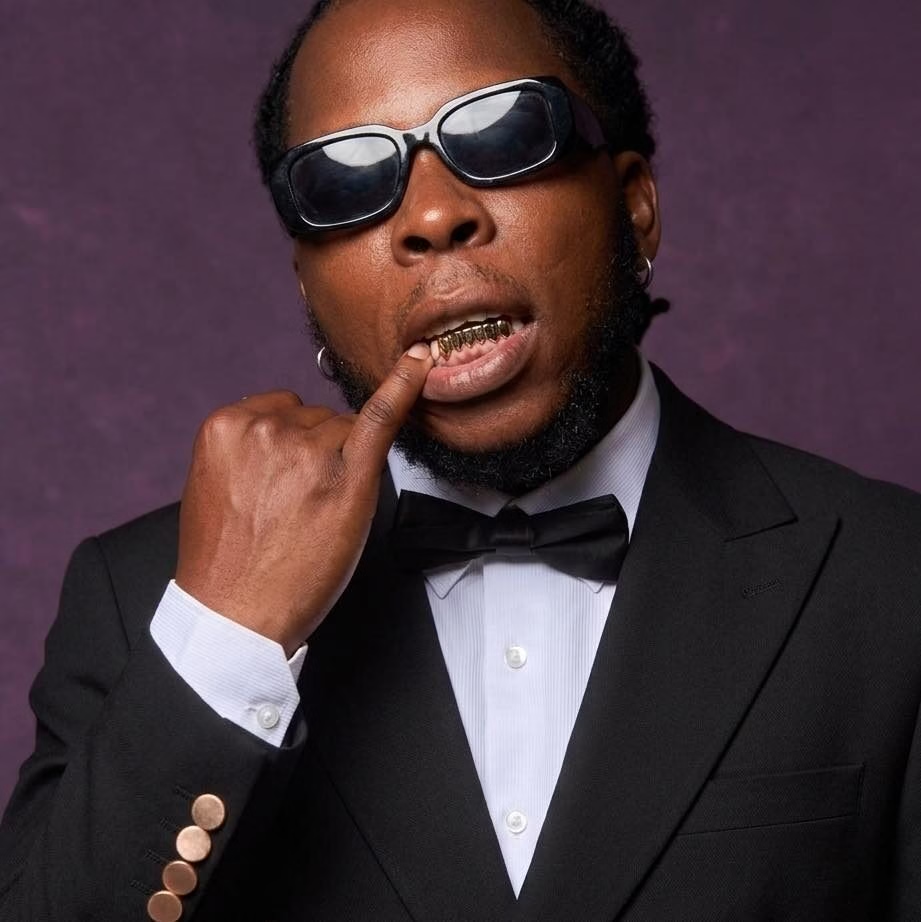
When asked whether he still experiences stereotypes and hindrances in the music industry, Edem admitted that the challenges have never truly ended.
“As for the obstacles, they are unending,” he said.
According to the rapper, some people often pressured him to change parts of his music to appeal to a wider audience, especially by incorporating more Twi into his songs despite not being fluent in the language.
“You just have a group of people call you and be like, ‘Charlie, make sure you put more Twi in it.’ I can’t speak the Twi… I also feel like you don’t tell people who rap in Twi to speak Ewe,” he explained.
Edem’s comments highlight conversations that have existed for years within Ghana’s entertainment industry about language, tribal identity and mainstream acceptance. While many artistes perform primarily in Twi, the rapper suggested that musicians from minority ethnic groups often face pressure to adapt in order to gain broader recognition.
The musician also recalled an incident during the 2009 Ghana Music Awards season when he earned eight nominations but still encountered comments suggesting his ethnicity should count against him.
“I think Billy said, ‘How can we be here for an Ewe to come and win all the awards?’ So there are very subtle things that people say,” he recounted.
According to Edem, some of the remarks were made publicly on television and radio while others happened privately behind closed doors.
He further revealed that beyond comments and criticism, some event promoters reportedly avoided booking him for performances in certain areas because of perceptions linked to his background.
The rapper also claimed that some endorsement agencies attempted to undervalue him despite his growing popularity at the time. According to him, there were attempts to compare his market value to other artistes in ways that reduced what he deserved financially.

Despite the experiences, Edem said he remained focused on his craft and refused to allow the setbacks to discourage him.
“But we navigate them diligently, graciously,” he stated.
Over the years, Edem has established himself as one of Ghana’s most respected rappers, known for blending Ewe, English and other local influences into his music. His journey from the Volta Region to national stardom has inspired many young artistes who come from backgrounds often underrepresented in mainstream entertainment.
His latest comments have since sparked conversations on social media about inclusivity, diversity and equal opportunities within Ghana’s music industry.