
|
Getting your Trinity Audio player ready...
|
Ghana and several African countries have been placed on heightened alert following the confirmation of two hantavirus cases in South Africa linked to a deadly outbreak aboard the cruise ship MV Hondius.
The outbreak, which has already claimed three lives globally, has prompted the Africa Centres for Disease Control and Prevention (Africa CDC) to issue a continental advisory urging member states to strengthen surveillance systems and reinforce public health measures.
In its statement, the Africa CDC called on African governments to improve port health monitoring, enhance infection prevention protocols, and ensure the rapid reporting of any suspected cases.
The confirmed South African infections form part of eight reported cases connected to the Dutch-flagged cruise ship, which departed Ushuaia, Argentina, on March 20, 2026. The vessel reportedly carried 147 passengers and crew members from 23 different nationalities.
According to the World Health Organization (WHO), the first confirmed South African case involved a Dutch national who became ill while onboard the ship. The man was medically evacuated from Ascension Island to Johannesburg, where he remains in intensive care but is said to be recovering.
The second confirmed case involved his 69-year-old wife, who reportedly disembarked at Saint Helena while already showing symptoms of illness. Her condition worsened during a flight to Johannesburg, and she later died upon arrival at a hospital on April 26.
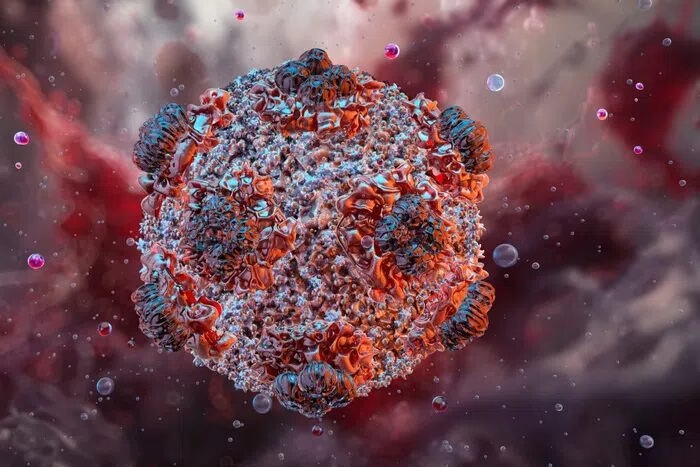
Laboratory tests conducted by South Africa’s National Institute for Communicable Diseases (NICD) confirmed that the infections involved the Andes strain of hantavirus.
Health experts say the Andes strain is particularly concerning because it is the only known type of hantavirus capable of limited human-to-human transmission.
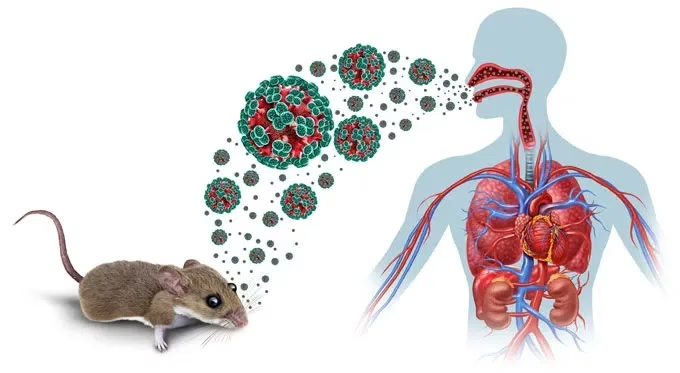
Hantavirus is primarily spread through contact with infected rodents or exposure to their urine, saliva, or droppings. People can also become infected by inhaling contaminated particles in the air.
Symptoms usually begin with fever, muscle pain, headaches, fatigue, and chills before potentially progressing into severe respiratory complications in advanced cases.
Although authorities have stressed that there is currently no evidence of transmission within African countries, the Africa CDC has warned governments against complacency.
“There is currently no evidence of transmission within African countries, and the risk to the general public remains low,” the agency stated.
As part of precautionary measures, travellers have been advised to maintain good hygiene, avoid exposure to rodents, and seek immediate medical attention if they experience flu-like symptoms or breathing difficulties after travelling.
Health authorities in several countries, including the United Kingdom, Switzerland, the United States, and Singapore, are also monitoring passengers linked to the cruise ship outbreak.
While no hantavirus cases have been recorded in Ghana so far, the advisory means the Ghana Health Service and other health agencies are expected to remain on high alert for any suspected infections involving travellers entering the country.
The situation has raised fresh concerns globally about infectious disease surveillance, especially as international travel continues to increase. Public health experts say early detection and rapid response remain crucial in preventing the spread of emerging diseases.