|
Getting your Trinity Audio player ready...
|
Nigerian filmmaker Uchenna Mbunabo has called on Ghana’s National Film Authority (NFA) to intensify efforts to combat copyright infringement, alleging that some television stations in Ghana are illegally broadcasting Nollywood films without the permission of their producers.
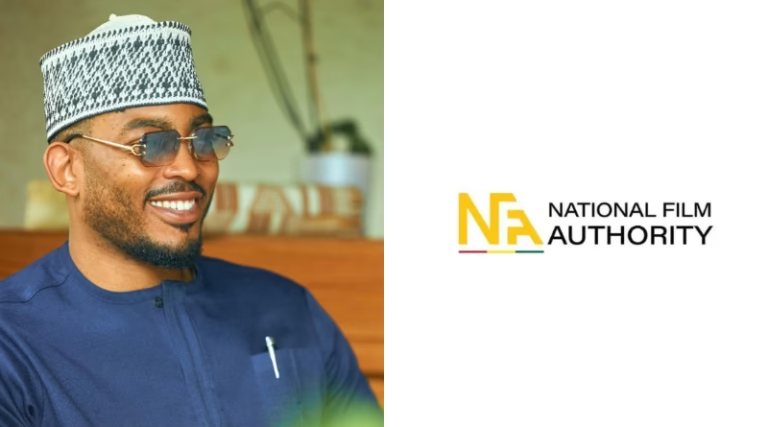
Mbunabo raised the issue during a discussion with the Deputy Chief Executive Officer of the National Film Authority, James Gardiner, where he questioned whether the unauthorised use of Nigerian films by some Ghanaian broadcasters was legally permitted.

According to the filmmaker, several television stations allegedly download newly released Nollywood movies from YouTube and air them without obtaining the required licences or approval from the content creators.
“I noticed that Ghanaian TV stations, the way they are stealing our films and showing them for free with impunity. Is it legalised in your country for TV stations to go on YouTube, download people’s sweat and show it for free?” Mbunabo asked.
He argued that the practice deprives filmmakers of legitimate revenue generated through YouTube and other licensed distribution platforms, making it difficult for producers to recover the huge investments made in movie production.
Mbunabo also stated that he had not observed Nigerian television stations engaging in similar practices and questioned what measures Ghana was taking to safeguard the intellectual property rights of filmmakers.
Responding to the concerns, James Gardiner acknowledged that unauthorised broadcasting of copyrighted content remains a challenge and confirmed that the National Film Authority is already working with relevant state institutions to strengthen enforcement.
According to him, the Authority has held discussions with the Ministry of Communications, the National Communications Authority (NCA) and the National Media Commission (NMC) to develop more effective strategies for tackling copyright violations.
Gardiner explained that although Ghana has copyright laws, enforcing them has become increasingly difficult because many television stations now operate digitally and do not maintain physical offices within the country.
“There are copyright laws, but they are not effective because a lot of the TV stations don’t have offices. Most of them are now digital, so they operate from anywhere. They can even have a Ghanaian TV station but be operating from Austria simply because it is digital,” he explained.
He disclosed that the National Film Authority is considering introducing a new licensing framework that would require television stations to undergo a fresh licensing process, making it easier for regulators to monitor their operations and enforce compliance.
Under the proposed reforms, broadcasters found guilty of illegally airing copyrighted content could face financial penalties and be required to compensate affected filmmakers. Repeat offenders may also face suspension of their broadcasting licences, while stations that continue to violate copyright laws could eventually have their licences revoked.
Although Gardiner did not provide a timeline for the implementation of the reforms, he expressed confidence that significant progress would be made within the next year.
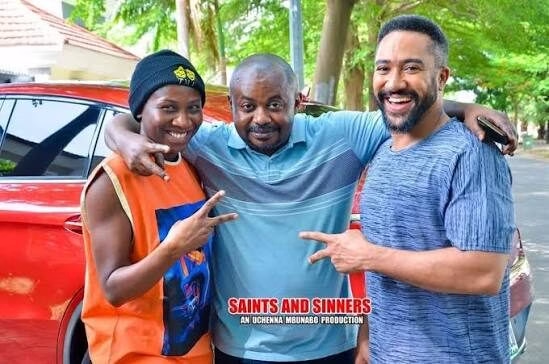
Mbunabo welcomed the proposed measures but urged the National Film Authority to expedite the process, stressing that continued piracy is causing substantial financial losses for filmmakers across Africa.
Despite his criticism, the Nigerian filmmaker emphasised that his comments were not directed at Ghana’s film industry as a whole. He noted that he has collaborated with several Ghanaian actors throughout his career and remains a strong supporter of partnerships between Nollywood and Ghallywood.
The issue has reignited conversations about copyright protection in Ghana’s creative industry, with many stakeholders calling for stronger enforcement measures to safeguard the rights and investments of filmmakers across the continent.