
|
Getting your Trinity Audio player ready...
|
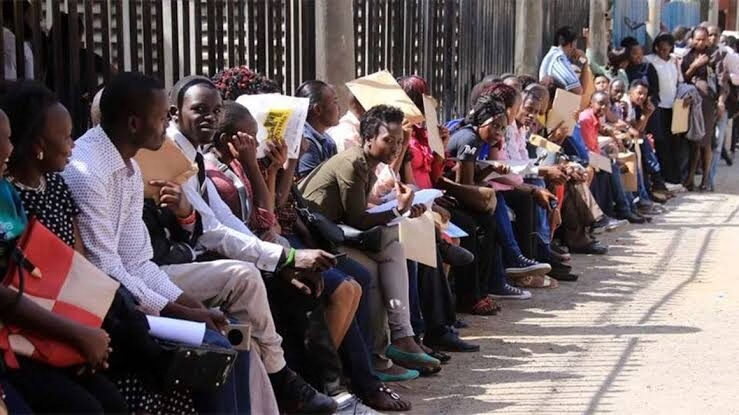
The Ghana Statistical Service (GSS) has revealed that nearly two million young people in Ghana are currently not in education, employment or training (NEET), highlighting a growing challenge for the country’s workforce and economic future.
According to the GSS, approximately two million Ghanaians aged between 15 and 35, representing 19.5% of the country’s youth population, were classified as NEET during the third quarter of 2025.
The figures were released as part of activities marking World Population Day, celebrated under the theme: “Investing in Ghana’s Future through Healthy, Skilled and Empowered Young People.”
Youth Development Remains a National Priority
The Ghana Statistical Service said the findings reinforce the urgent need for greater investment in education, skills development and employment opportunities to ensure Ghana’s youthful population becomes a productive force for national development.
With young people accounting for an increasing share of Ghana’s population, the agency stressed that improving access to quality education, vocational training and decent jobs remains essential for the country’s long-term economic growth.
High Youth Unemployment Continues
The report also highlights the persistent challenge of youth unemployment in Ghana.
According to data from the Quarterly Labour Force Survey, unemployment among people aged 15 to 35 averaged 21.9% during the first three quarters of 2025, significantly higher than the national unemployment rate of 12.8%.
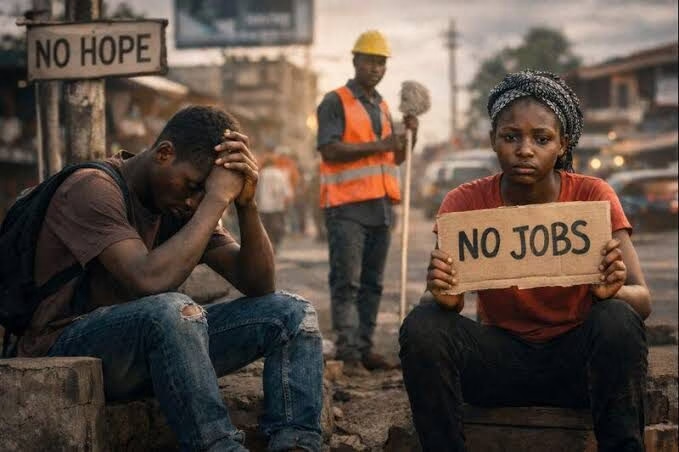
The GSS warned that the growing number of young people outside education and employment could limit Ghana’s ability to fully benefit from its youthful population.
Concerns Over Adolescent Pregnancy
Beyond unemployment, the report also raised concerns about adolescent pregnancy.
Findings from the 2022 Ghana Demographic and Health Survey showed that 15% of girls aged between 15 and 19 had experienced pregnancy, while 11% had already given birth.
The GSS noted that early pregnancy often disrupts education, limits opportunities for skills acquisition and reduces young women’s chances of securing decent employment later in life.
Ghana’s Growing Youth Population
The Service observed that Ghana’s demographic structure presents both opportunities and challenges.
Young people aged 15 to 35 now account for 36.9% of Ghana’s estimated population of 33.7 million, compared to 34.6% in 2000. This growing youth population has the potential to drive economic development if provided with the right education, skills and employment opportunities.
GSS Calls for More Investment
To address the challenge, the Ghana Statistical Service is urging policymakers to prioritise:
- Technical and vocational education and training (TVET)
- Stronger school-to-work transition programmes
- Entrepreneurship support for young people
- Expansion of industries capable of creating sustainable jobs
- Policies that improve youth employability and economic participation
The Service emphasised that Ghana’s ability to harness its demographic dividend will depend largely on how effectively it invests in the education, empowerment and employment of its young population.