
|
Getting your Trinity Audio player ready...
|
The new system, which incorporates Radio Frequency Identification (RFID) technology, will be piloted from August 2026, with a nationwide re-registration exercise for existing vehicles scheduled to begin on January 1, 2027.
Speaking on JoyNews on July 24, 2026, DVLA Chief Executive Officer Julius Neequaye Kotey said the initiative forms part of the Authority’s broader digital transformation agenda aimed at strengthening vehicle registration, ownership verification and law enforcement.

RFID technology to improve vehicle identification
Under the new system, every vehicle number plate will contain an embedded RFID chip capable of storing unique vehicle information.
Authorised security agencies equipped with RFID scanners will be able to instantly retrieve details of registered vehicles, making it easier to detect stolen vehicles, cloned number plates and other forms of vehicle-related crime.
According to the DVLA, the technology will also support electronic toll collection, speed enforcement, traffic management and criminal investigations.
Centralised production to eliminate illegal embossing
The Authority has announced that all vehicle number plates will now be produced through a single centralised production system linked directly to the DVLA’s national database.
Vehicle information will first be verified before any plate is embossed by authorised producers, significantly reducing opportunities for illegal plate production and cloning.
Digital database integration
The new number plate system will be fully integrated with the DVLA’s central database and connected to key state institutions, including:
- Ghana Police Service
- Ghana Highway Authority
- National Insurance Commission
- The Judiciary
The integration is expected to enable faster verification of vehicle records during investigations, insurance claims and court proceedings.
Existing vehicles must migrate to digital platform
The DVLA has directed owners of vehicles registered before 2023 to migrate their records onto the Authority’s digital platform before the nationwide re-registration exercise begins.
Failure to complete the onboarding process will prevent affected vehicle owners from obtaining registration documents or participating in the mandatory re-registration programme.
Phone verification to prevent fraud
As an additional security measure, the DVLA has introduced mobile phone verification into the registration process.
Whenever a vehicle registration is initiated through an agent, a verification code will be sent directly to the registered owner’s mobile phone. Registration can only be completed after the owner confirms the transaction, reducing the risk of fraudulent registrations.
New number plate design
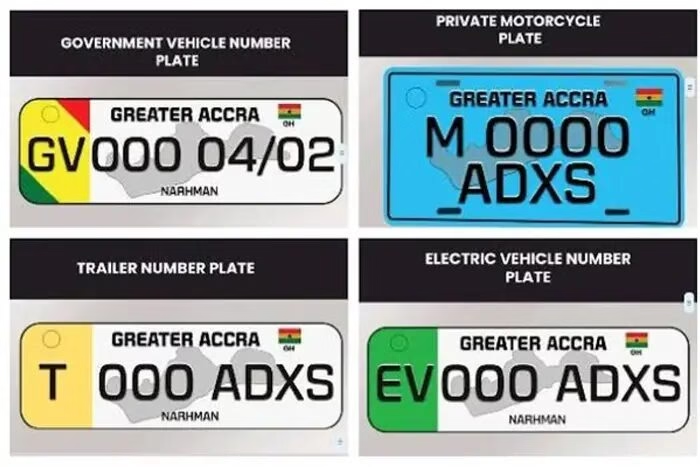
The redesigned number plates will feature more than just a vehicle registration number.
Instead of displaying the traditional year suffix, the plates will include:
- A unique vehicle identification number
- Regional and zonal identification codes
- Reflective materials for improved visibility
- Standardised fonts for easier reading by security agencies
The DVLA believes these improvements will make vehicle identification faster and more reliable.
Redesigned DV and TMP plates
The Authority is also introducing new Defective Vehicle (DV) and Temporary (TMP) number plates after uncovering more than 30,000 fake DV plates earlier this year.
The redesigned plates are expected to reduce abuse of the temporary registration system while strengthening enforcement.
Rollout timetable
According to the DVLA, upgrades to the digital system are expected to be completed by July 31, 2026, ahead of the pilot programme beginning in August 2026 with government-owned vehicles.
Registration of currently unregistered vehicles will commence on September 1, 2026, while the nationwide re-registration of all existing vehicles will run from January 1, 2027, to December 31, 2028, giving motorists a two-year window to transition to the new digital number plate system.
The DVLA says the initiative represents a major step towards improving road safety, strengthening vehicle ownership verification and protecting motorists from fraud while modernising Ghana’s transport registration system.
The Driver and Vehicle Licensing Authority (DVLA) has announced plans to introduce a new generation of digital vehicle number plates as part of efforts to combat number plate cloning, illegal embossing and vehicle-related fraud across Ghana.
The new system, which incorporates Radio Frequency Identification (RFID) technology, will be piloted from August 2026, with a nationwide re-registration exercise for existing vehicles scheduled to begin on January 1, 2027.
Speaking on JoyNews on July 24, 2026, DVLA Chief Executive Officer Julius Neequaye Kotey said the initiative forms part of the Authority’s broader digital transformation agenda aimed at strengthening vehicle registration, ownership verification and law enforcement.
RFID technology to improve vehicle identification
Under the new system, every vehicle number plate will contain an embedded RFID chip capable of storing unique vehicle information.
Authorised security agencies equipped with RFID scanners will be able to instantly retrieve details of registered vehicles, making it easier to detect stolen vehicles, cloned number plates and other forms of vehicle-related crime.
According to the DVLA, the technology will also support electronic toll collection, speed enforcement, traffic management and criminal investigations.
Centralised production to eliminate illegal embossing
The Authority has announced that all vehicle number plates will now be produced through a single centralised production system linked directly to the DVLA’s national database.
Vehicle information will first be verified before any plate is embossed by authorised producers, significantly reducing opportunities for illegal plate production and cloning.
Digital database integration
The new number plate system will be fully integrated with the DVLA’s central database and connected to key state institutions, including:
- Ghana Police Service
- Ghana Highway Authority
- National Insurance Commission
- The Judiciary
The integration is expected to enable faster verification of vehicle records during investigations, insurance claims and court proceedings.
Existing vehicles must migrate to digital platform
The DVLA has directed owners of vehicles registered before 2023 to migrate their records onto the Authority’s digital platform before the nationwide re-registration exercise begins.
Failure to complete the onboarding process will prevent affected vehicle owners from obtaining registration documents or participating in the mandatory re-registration programme.
Phone verification to prevent fraud
As an additional security measure, the DVLA has introduced mobile phone verification into the registration process.
Whenever a vehicle registration is initiated through an agent, a verification code will be sent directly to the registered owner’s mobile phone. Registration can only be completed after the owner confirms the transaction, reducing the risk of fraudulent registrations.
New number plate design
The redesigned number plates will feature more than just a vehicle registration number.
Instead of displaying the traditional year suffix, the plates will include:
- A unique vehicle identification number
- Regional and zonal identification codes
- Reflective materials for improved visibility
- Standardised fonts for easier reading by security agencies
The DVLA believes these improvements will make vehicle identification faster and more reliable.
Redesigned DV and TMP plates
The Authority is also introducing new Defective Vehicle (DV) and Temporary (TMP) number plates after uncovering more than 30,000 fake DV plates earlier this year.
The redesigned plates are expected to reduce abuse of the temporary registration system while strengthening enforcement.
Rollout timetable
According to the DVLA, upgrades to the digital system are expected to be completed by July 31, 2026, ahead of the pilot programme beginning in August 2026 with government-owned vehicles.
Registration of currently unregistered vehicles will commence on September 1, 2026, while the nationwide re-registration of all existing vehicles will run from January 1, 2027, to December 31, 2028, giving motorists a two-year window to transition to the new digital number plate system.
The DVLA says the initiative represents a major step towards improving road safety, strengthening vehicle ownership verification and protecting motorists from fraud while modernising Ghana’s transport registration system.