
|
Getting your Trinity Audio player ready...
|
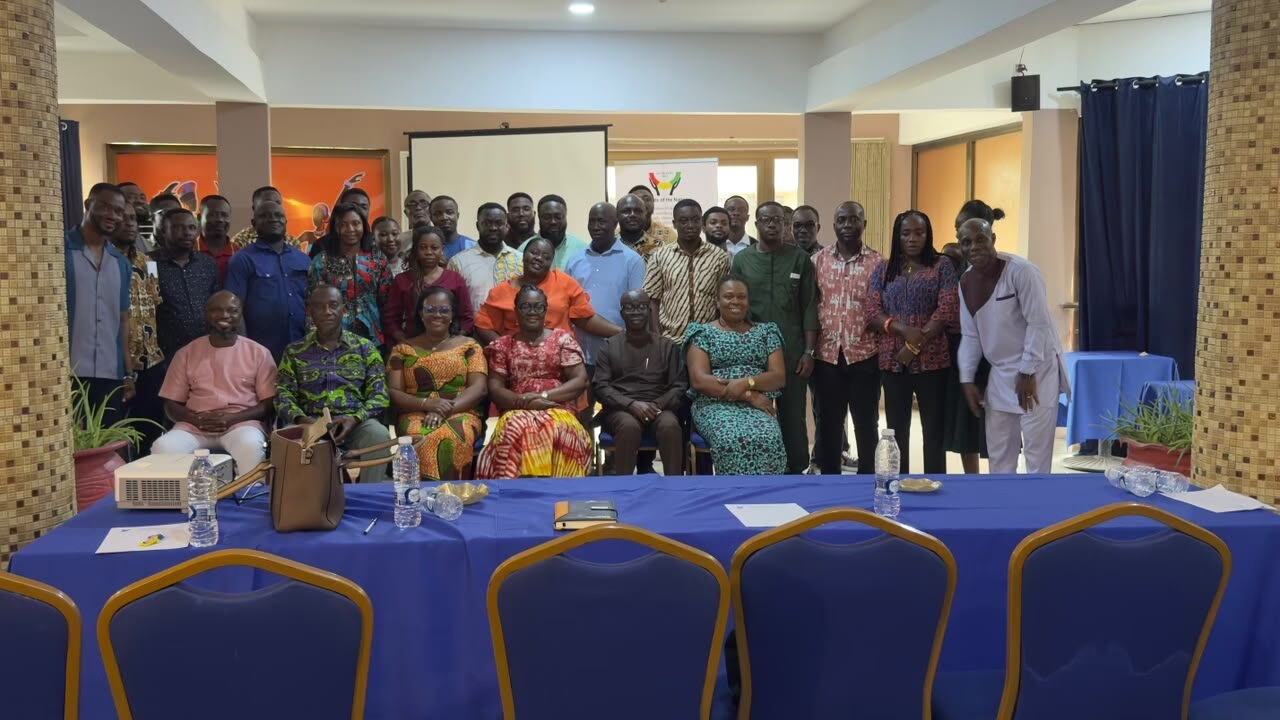
Representatives from government institutions, Metropolitan, Municipal and District Assemblies (MMDAs), academia, civil society organisations, traditional authorities, development partners and the private sector have called for stronger collaboration to address the growing environmental challenges confronting communities across Ghana’s Western Region.
The call was made during the Multi-Stakeholder Dialogue on Gender-Just Green Solutions and Energy Transition, organised by Friends of the Nation (FoN) in partnership with Oxfam and with support from the Danish International Development Agency (DANIDA).
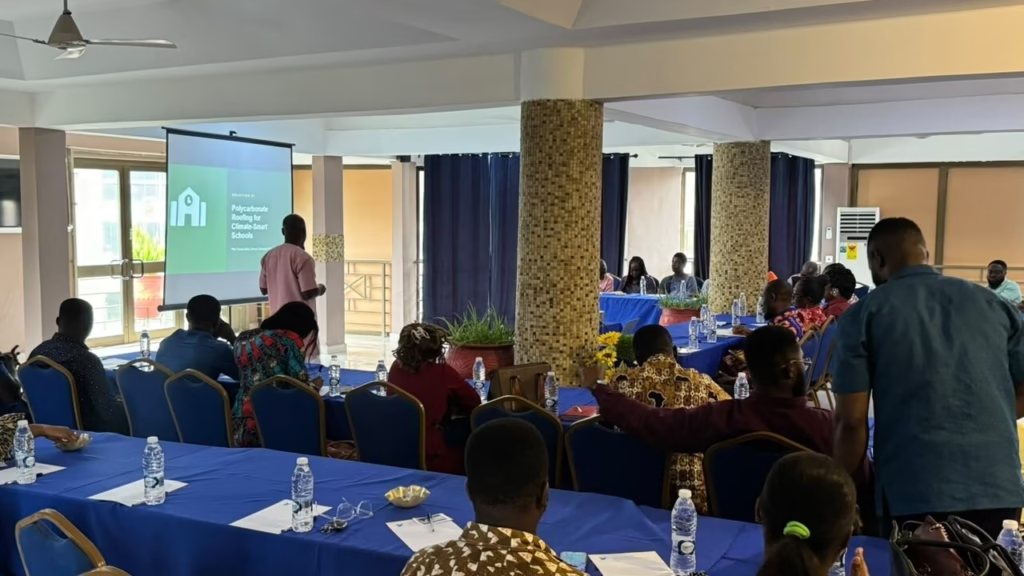
Held at Akroma Plaza in Takoradi, the dialogue brought together key stakeholders, including the Environmental Protection Agency (EPA), Ghana Gas Company Limited, Takoradi Technical University (TTU), district assemblies, traditional leaders, civil society organisations, community representatives and the media to explore practical, climate-smart and gender-responsive solutions for sustainable development.
The engagement served as a platform for participants to exchange experiences, identify environmental challenges affecting their communities and recommend practical interventions that could accelerate Ghana’s transition to a greener and more resilient future.
During one of the plenary sessions, representatives from the participating Metropolitan, Municipal and District Assemblies outlined some of the most pressing environmental issues facing their jurisdictions.
The Ellembelle District Assembly identified the indiscriminate cutting of mangrove forests as a growing concern.
According to the representative, the destruction of mangroves threatens coastal ecosystems, fisheries and biodiversity while exposing communities to increased coastal erosion and the impacts of climate change.
The Shama Municipal Assembly highlighted uncontrolled clay mining as a major environmental challenge.
Participants noted that the activity has contributed to land degradation and poses long-term environmental risks if not effectively regulated.
Representatives from the Jomoro Municipal Assembly raised concerns over open defecation, describing it as a persistent sanitation issue affecting public health and environmental quality.
They called for increased investment in sanitation facilities and intensified public education to eliminate the practice.
The Sekondi-Takoradi Metropolitan Assembly (STMA) pointed to poor waste management as one of its biggest concerns.
Officials explained that indiscriminate disposal of refuse continues to choke drains, contributing significantly to flooding during periods of heavy rainfall.
For the Tarkwa-Nsuaem Municipal Assembly, illegal mining, popularly known as galamsey, remains the municipality’s greatest environmental challenge.
The assembly noted that illegal mining continues to pollute rivers, destroy forest reserves and degrade agricultural lands, threatening livelihoods and sustainable development.
Meanwhile, the Nzema East Municipal Assembly identified flooding as one of its recurring challenges, while the Ahanta West Municipal Assembly also highlighted flooding as a major issue affecting several communities, particularly during the rainy season.
Unlike many of the other assemblies, the Effia-Kwesimintsim Municipal Assembly (EKMA) reported positive progress in environmental management. Its representative indicated that ongoing sanitation initiatives and environmental management programmes are helping to maintain cleaner communities and improve public health.
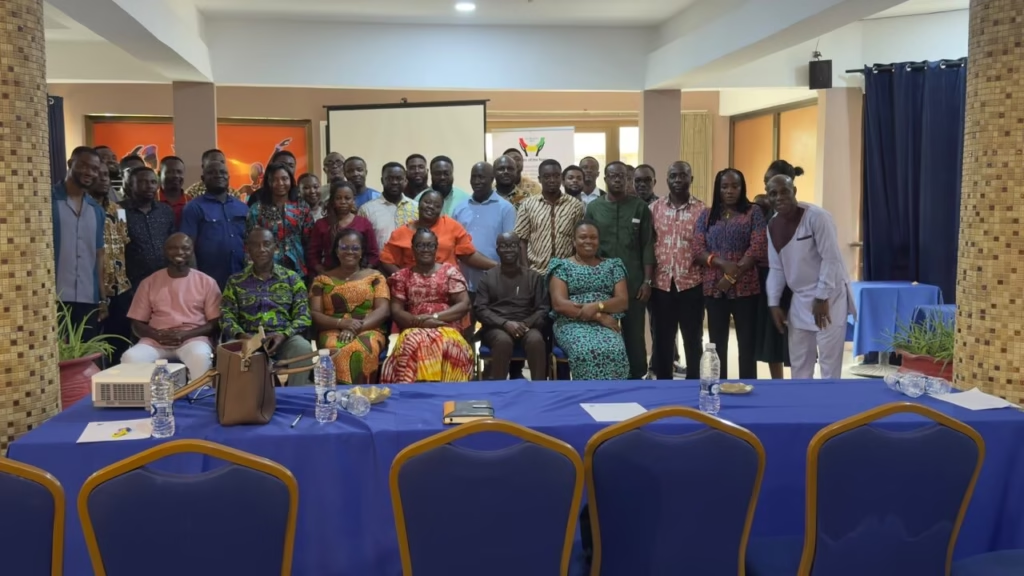
Participants agreed that although the environmental challenges differ across municipalities, they all require stronger partnerships, innovative policies and sustained investments in climate-smart and gender-responsive solutions.
Stakeholders further emphasised the importance of collaboration among government institutions, academia, development partners, civil society organisations, the private sector and local communities to accelerate environmental protection and climate resilience across the Western Region.
The dialogue concluded with a renewed commitment from stakeholders to strengthen partnerships, promote locally driven green solutions and support actions that will enhance environmental sustainability and contribute to Ghana’s just energy transition.