
|
Getting your Trinity Audio player ready...
|
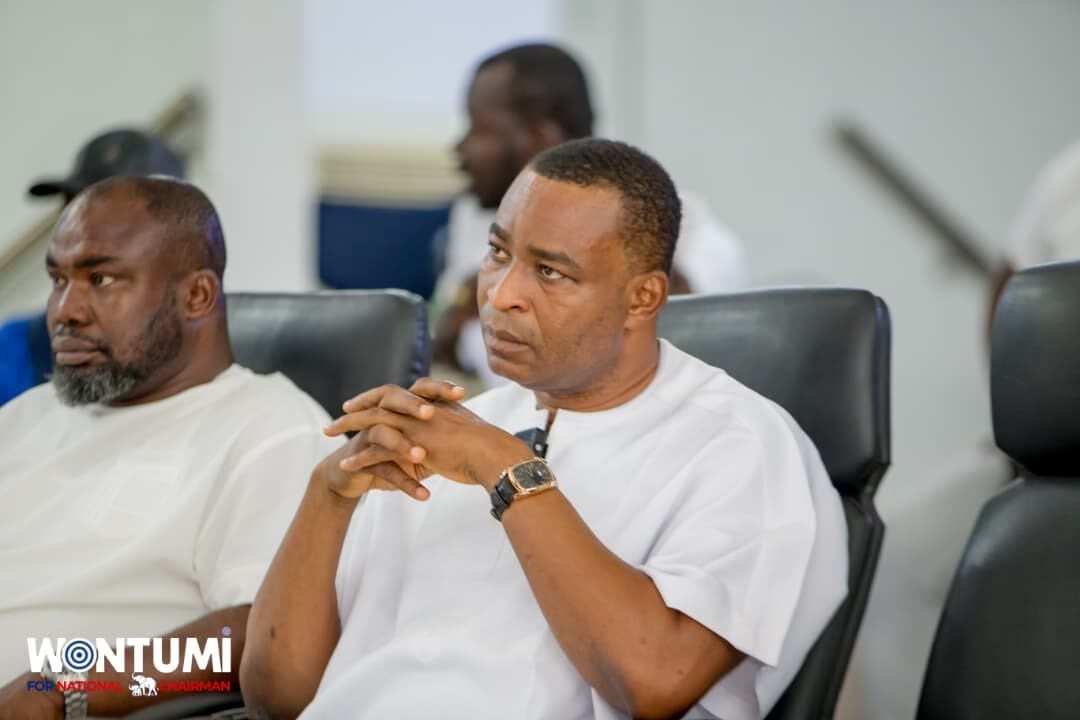
The High Court has set July 3, 2026, to deliver judgment in the high-profile illegal mining case involving Bernard Antwi-Boasiako, the Ashanti Regional Chairman of the New Patriotic Party, and two other accused persons.
The date was fixed after the defence officially closed its case on Wednesday, June 3, following testimony from its fifth and final witness.

The final witness, Evans Addae, was cross-examined by Deputy Attorney General Justice Srem Sai, bringing the defence stage of the trial to an end and paving the way for judgment.
The case is linked to allegations of illegal mining activities at a concession in Samreboi in Ghana’s Western Region. Chairman Wontumi and his co-accused have been standing trial over charges connected to the mining operation.
At the close of proceedings, the court directed both the prosecution and defence teams to file all written addresses and legal submissions they intend to rely on by June 17, 2026.
The judgment scheduled for July 3 is expected to conclude months of legal proceedings that have attracted widespread public and political attention across the country.
Throughout the trial, the court heard testimony from several prosecution and defence witnesses, including former Western Regional Minister Kwabena Okyere Darko-Mensah, who appeared as the fourth defence witness.
Reacting to the court’s decision, one of Chairman Wontumi’s lawyers, Tetteh Thompson, expressed confidence in the legal process.
“On our part, we have done what is necessary, and we are very convinced that the system will work and the court will do the needful,” he told Joy News.
With both the prosecution and defence now having concluded their cases, attention has shifted to the court’s final determination on whether the prosecution has successfully proven the allegations against Chairman Wontumi and the two other accused persons.
The illegal mining case has remained one of the most talked-about legal battles in Ghana due to Chairman Wontumi’s political influence and the growing national concern over galamsey activities.
Illegal mining continues to pose serious environmental threats across several parts of the country, particularly in mining communities where water bodies and farmlands have been heavily affected.
The outcome of the case is expected to generate strong public reactions, especially among political supporters and anti-galamsey campaigners.
Many observers believe the judgment could set an important precedent for how high-profile illegal mining cases are handled in Ghana’s justice system moving forward, regardless of political affiliation or social status.