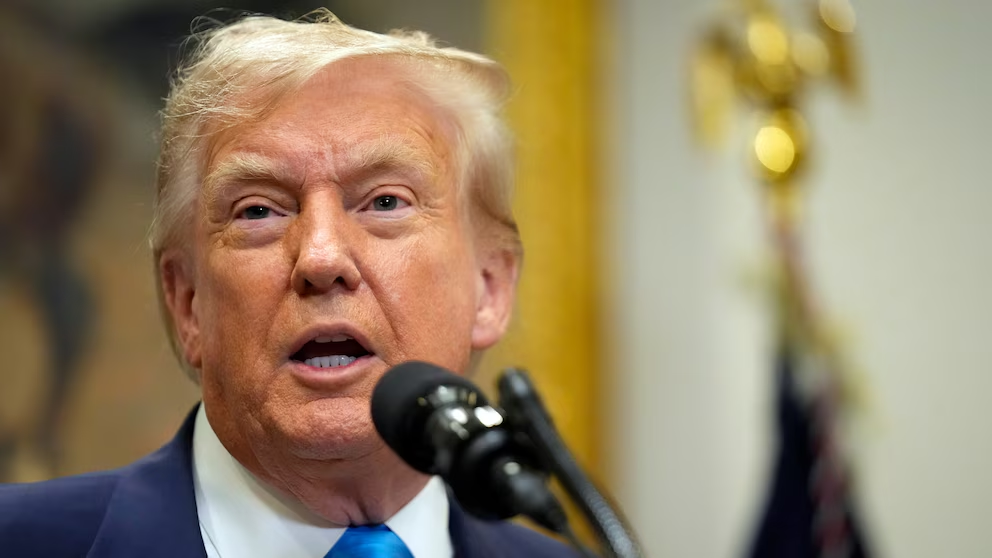
President Donald Trump has insisted that consumer prices in the United States are falling “tremendously,” as he attempted to reassure anxious voters during a lively campaign-style rally in Pennsylvania on Tuesday.
Speaking at a casino in the battleground state, the president declared that he has “no higher priority than making America affordable again,” even as economic indicators and voter sentiment paint a more complex picture.
While the cost of certain items such as fuel and eggs has eased in recent months, the prices of many essentials, including meat, groceries, housing, childcare, and healthcare, remain stubbornly high.
This imbalance continues to weigh heavily on households, contributing to declining consumer confidence and creating a political vulnerability for Trump as he heads into next year’s midterm elections.
The rally marked the beginning of a series of events aimed at amplifying the White House’s economic message.
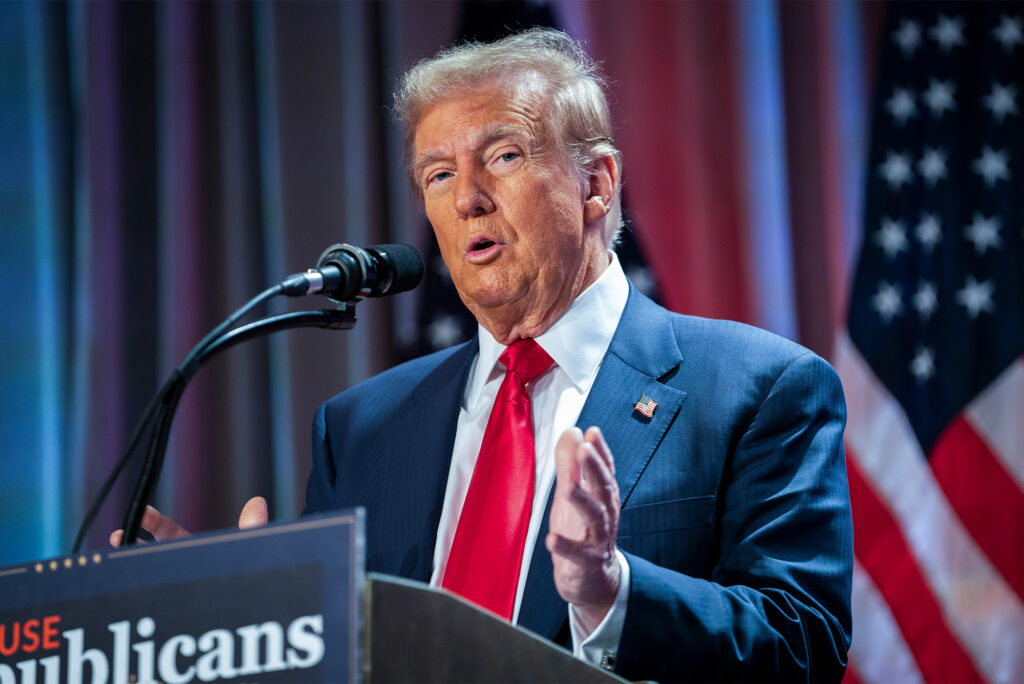
But at one point, Trump dismissed affordability concerns as a Democratic “hoax,” even as he emphasized the administration’s efforts to ease financial strain through tariff reductions on dozens of food products and policy rollbacks on fuel efficiency standards.
He also touted a new initiative involving Trump-branded retirement accounts for children, describing them as steps toward lowering costs for families.
Still, Democrats have seized on the public mood surrounding the economy, pointing to recent local and state election results where economic dissatisfaction played a decisive role.
Many Republicans are quietly uneasy about the months ahead, aware that voters continue to express frustration despite the president’s upbeat messaging.
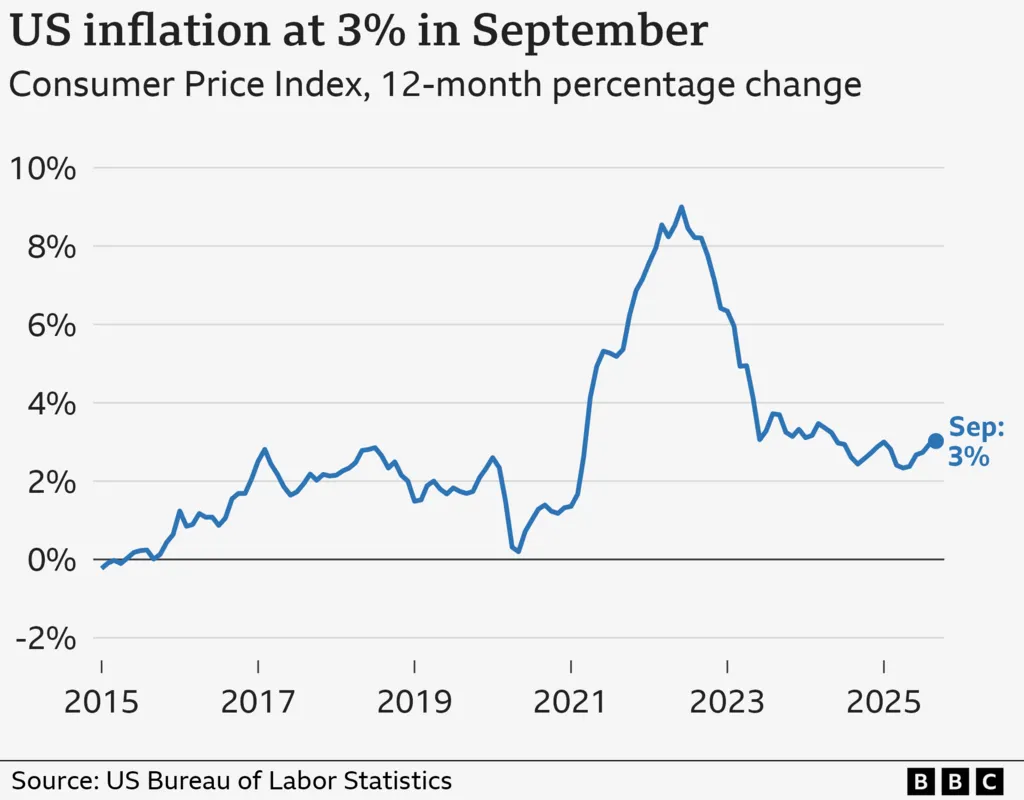
Economic data reinforces the mixed nature of the current landscape. Inflation stands at 3%, unchanged since January and above the Federal Reserve’s 2% target. Prices are not falling overall; rather, they are rising at a slower pace—a trend economists call disinflation.
Over the past five years, prices have risen a cumulative 25%, outpacing wage growth for many households. Meanwhile, the Federal Reserve has eased interest rates twice this year, bringing them to around 3.9%, and further cuts are expected.
Some Americans interviewed expressed deep concern about their financial pressures. Alaina Hunt, a 37-year-old designer from Oklahoma City, said she lost her job earlier this year in part due to tariffs on steel and aluminium—policies she believes worsened conditions in construction.
Despite applying for more than 75 jobs, she remains unemployed and said her weekly grocery bill has risen by about $25. “I was able to scrape by a lot easier in years before,” she said. “I don’t think the federal government is listening at all.”
In Kansas, Beth Richardson, 45, described being stunned by everyday prices, recalling a pack of gum that cost nearly $5. She, too, lost her job after corporate restructuring and blamed tariff policies for driving costs higher. “It feels like we’re shooting ourselves in the foot,” she said.
Even some long-time Trump supporters have felt the squeeze. John Mohring, a construction worker from Wisconsin, said grocery bills have climbed steadily, though he continues to back the president’s aggressive tariff agenda.
Farmers like Brad Smith in Illinois have faced their own challenges as trade tensions with China disrupted agricultural markets this year. While purchases have recently resumed following a trade agreement, Smith acknowledged the earlier damage but maintained confidence in Trump’s economic approach.
As the president continues to champion his “America First” policies, both the data and public sentiment suggest that the battle over economic perception will remain central to the political landscape in the months ahead.