
President John Dramani Mahama has formally assented to the 24-Hour Economy Authority Bill, 2025, marking a major step in the government’s flagship strategy to transform Ghana’s economy.
The Bill was signed into law during a brief ceremony held ahead of the 13th Cabinet meeting on Thursday, February 19, 2026. The legislation establishes the 24-Hour Economy Authority as the central coordinating body responsible for implementing the policy nationwide.
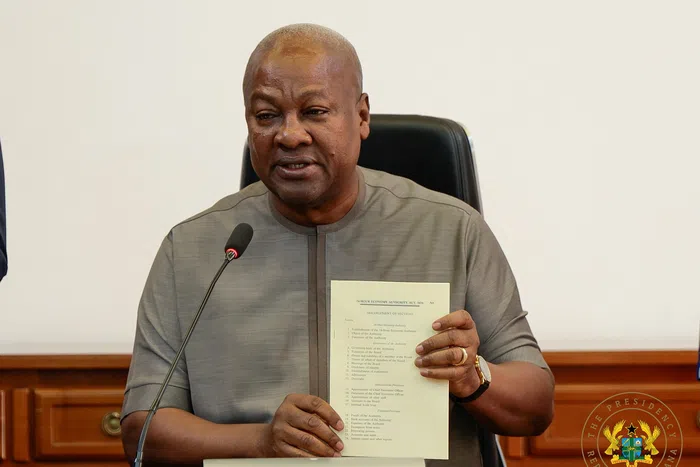
In his remarks after signing the Bill, President Mahama described the legislation as long anticipated by Ghanaians and central to his administration’s agenda of boosting productivity and expanding employment opportunities.
He explained that the process required time and careful deliberation to ensure proper legal backing for the initiative. “Now we must move from strategy to implementation. The business sector is waiting, Ghanaian investors are waiting, foreign investors are waiting,” he stated.
According to the President, the Authority will play a key role in presenting a clear package of incentives to attract both domestic and foreign investment. He emphasised that investors are eager to see the details of the policy framework and the support mechanisms that will enable businesses to expand operations, increase productivity, and generate employment for young people.
“They want to see the package of incentives that we can afford, so that they can invest more and expand productivity and also create more employment for our young people, and so it’s my pleasure to assent to this Bill today,” he added.
The newly established Authority will serve as the coordinating institution for the 24-Hour Economy and Accelerated Export Development Programme — a broader national economic transformation strategy aimed at promoting inclusive growth and competitiveness.
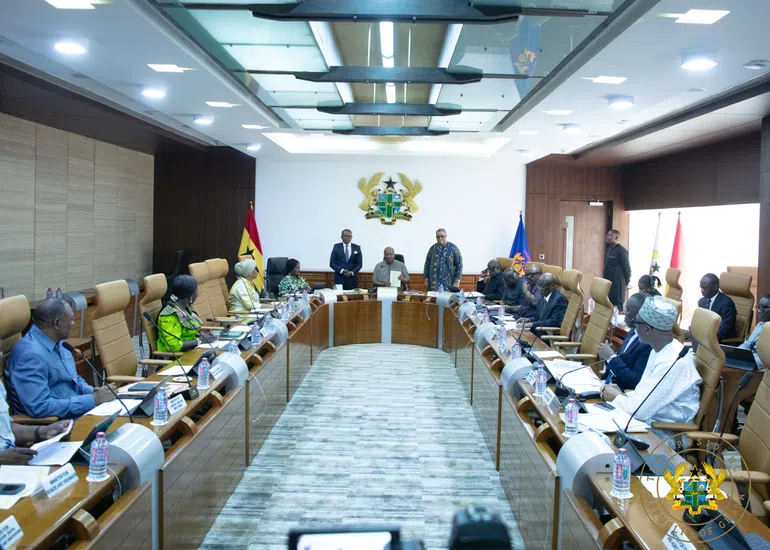
Its mandate includes aligning public and private sector efforts, addressing infrastructure gaps, and streamlining regulatory requirements necessary for businesses to operate around the clock. By ensuring effective coordination across sectors, the Authority is expected to remove bottlenecks that hinder productivity.
A key objective of the initiative is to reduce Ghana’s dependence on exporting low-value raw materials while limiting the country’s reliance on imported finished and intermediate goods. Through targeted industrialisation, value addition, and export diversification, the policy seeks to strengthen Ghana’s production capacity.
The Authority will also oversee monitoring and evaluation mechanisms to ensure that the 24-Hour Economy policy delivers measurable outcomes in job creation, investment growth, and sustainable development.
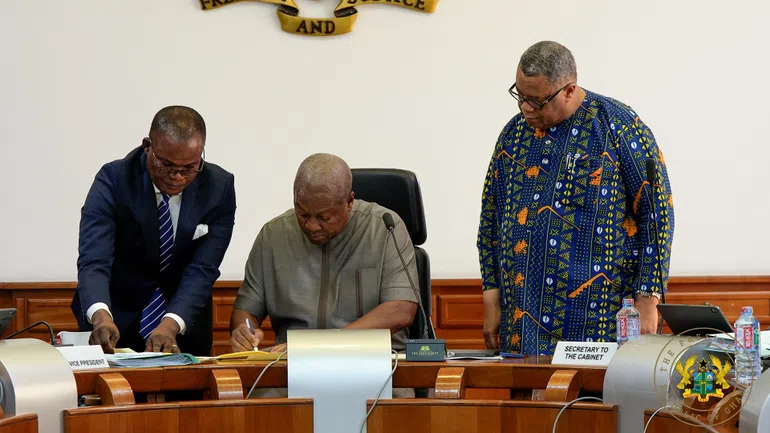
The 24-Hour Economy initiative has been a cornerstone of the government’s economic vision. With the Bill now assented to, attention shifts to implementation — as businesses, investors, and stakeholders look forward to the rollout of incentives and operational guidelines designed to reshape Ghana’s economic landscape.