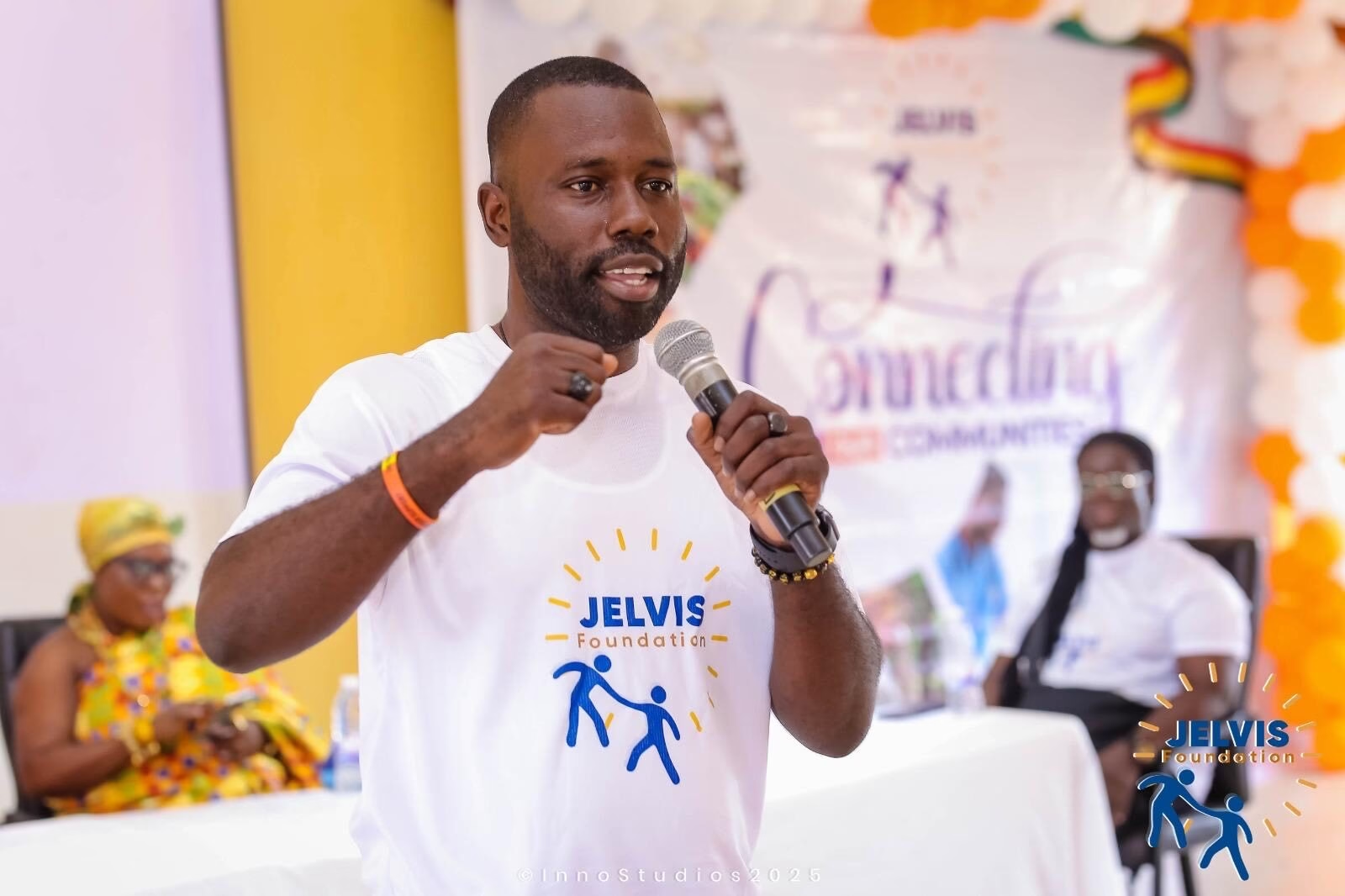
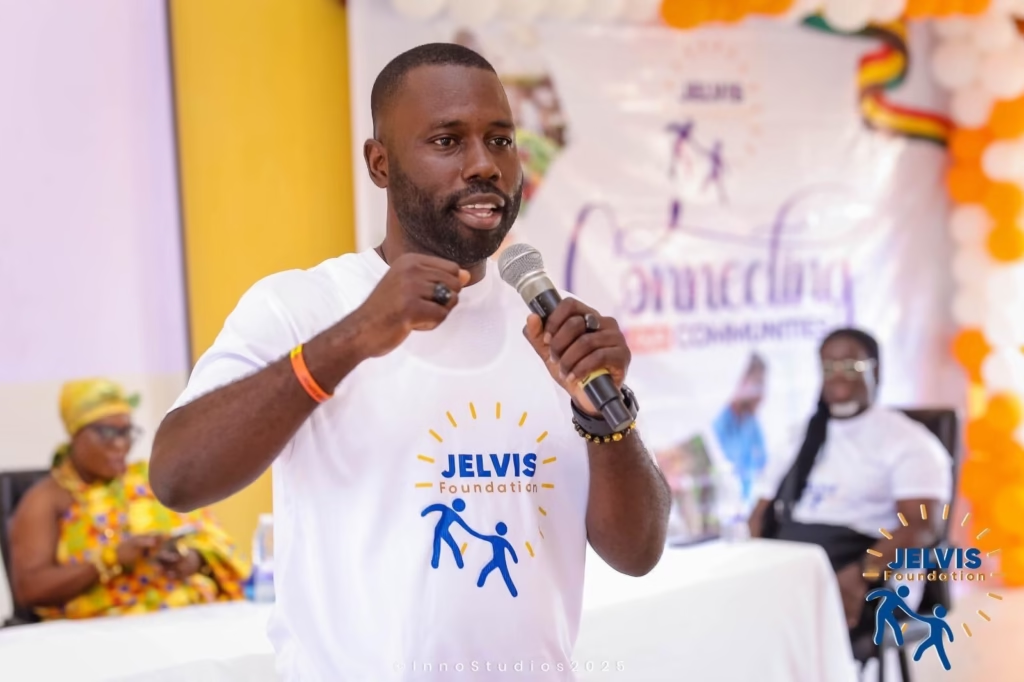
During an interview with One King Multimedia, Jelvis Kwame Baidoo has called for a renewed focus on what he describes as “impact-driven leadership” in the Western Region.
According to him, the role of Members of Parliament must go beyond visibility-driven activities and instead prioritize meaningful, long-term development that directly improves the lives of constituents.
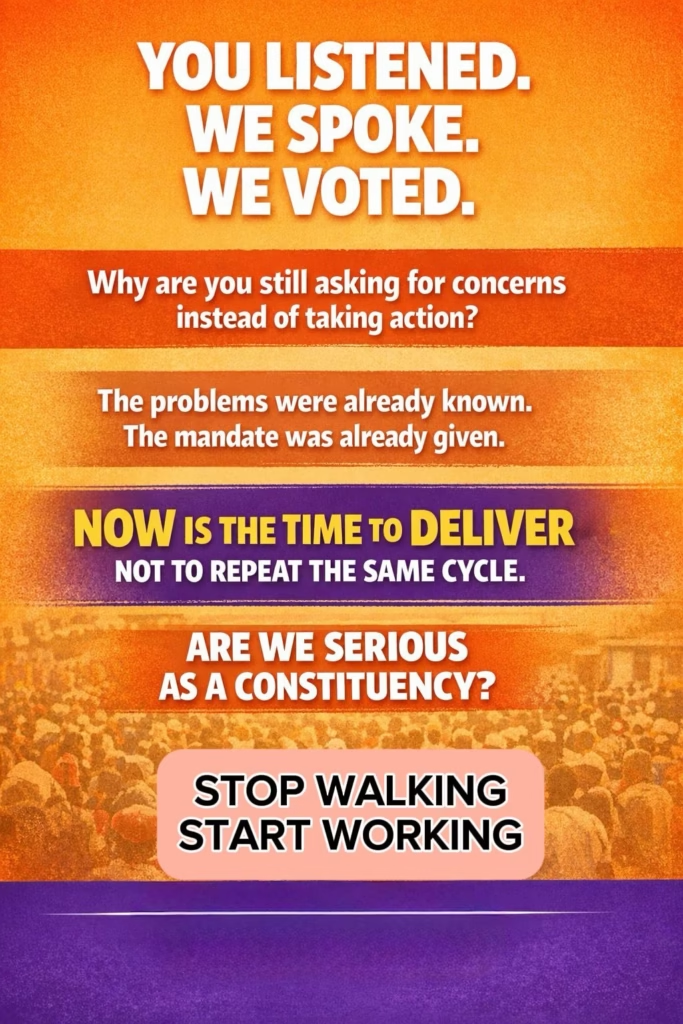
His remarks come at a time when several political leaders in the region have intensified their engagement with communities through visitations, donations, and outreach programs.
A recent example is Isaac Boamah Nyarko, who interacted with youth groups at Sani’s Camp in the West Tanokrom Electoral Area and Campu Nowin in the East Tanokrom Electoral Area.
During these engagements, he listened to concerns, shared ideas on development, and reaffirmed his commitment to empowering young people to contribute to a better future.
While acknowledging that such interactions are important for understanding the needs of the people, Mr. Baidoo emphasized that leadership must not stop at engagement alone.
He noted that listening to concerns and making promises must be followed by deliberate actions that produce visible and measurable outcomes.
“Engagement is good, but it is not enough,” he stated. “The people need to see real change—jobs, opportunities, infrastructure, and systems that will sustain their growth.”
Mr. Baidoo further expressed concern about what he described as a growing trend where political activities are sometimes centered around optics rather than substance.
He cautioned that focusing too much on public appearances, donations, and symbolic gestures risks creating an illusion of progress while underlying issues remain unaddressed.
According to him, the true measure of leadership lies in the ability to create opportunities that empower people to become self-reliant.
He stressed that youth engagement, in particular, should translate into concrete programs such as skills training, entrepreneurship support, and job creation initiatives.
He also highlighted the importance of accountability, urging leaders to align their actions with the expectations of the people they represent.
“You cannot build a constituency with promises alone,” he added. “Development must be intentional, structured, and consistent.”
His comments have sparked conversations among residents and observers, with many agreeing that while community visits and interactions are valuable, they must lead to tangible results.
Others believe that such critiques are necessary to ensure that leadership remains focused on delivering real impact.
Mr. Baidoo concluded by calling for a collective shift in mindset—both from leaders and constituents.
He encouraged citizens to demand more from their representatives and to prioritize development over political appearances.
In his view, the future of the Western Region depends not on how often leaders are seen, but on what they are able to achieve.
He believes that with the right focus, leadership can move beyond symbolic gestures to create lasting change that benefits entire communities.