
The Economic Community of West African States (ECOWAS) has announced the deployment of its Standby Force to the Republic of Benin, following growing political instability and a sudden military takeover.
The decision, according to the ECOWAS Commission, is aimed at preserving constitutional order, safeguarding territorial integrity, and restoring stability in the country.
This major step was approved after an emergency meeting of the ECOWAS Mediation and Security Council, held at the level of Heads of State and Government. The decision is anchored in Article 25(e) of the 1999 ECOWAS Protocol on Conflict Prevention, Management, Resolution, Peacekeeping, and Security, which provides guidelines for regional intervention during constitutional crises or heightened security threats.
In its official statement issued on Sunday, December 7, 2025, ECOWAS revealed that the deployment was authorized by the Chair of the Authority of Heads of State and Government. The mission is expected to take “immediate effect,” though details regarding troop size, operational scope, and duration were not disclosed.
The Standby Force will consist of personnel drawn from four member states—Nigeria, Sierra Leone, Côte d’Ivoire, and Ghana. These troops will coordinate their efforts with the Government of Benin and the Republican Army to undertake operations aimed at stabilizing the security environment and supporting the restoration of democratic governance.
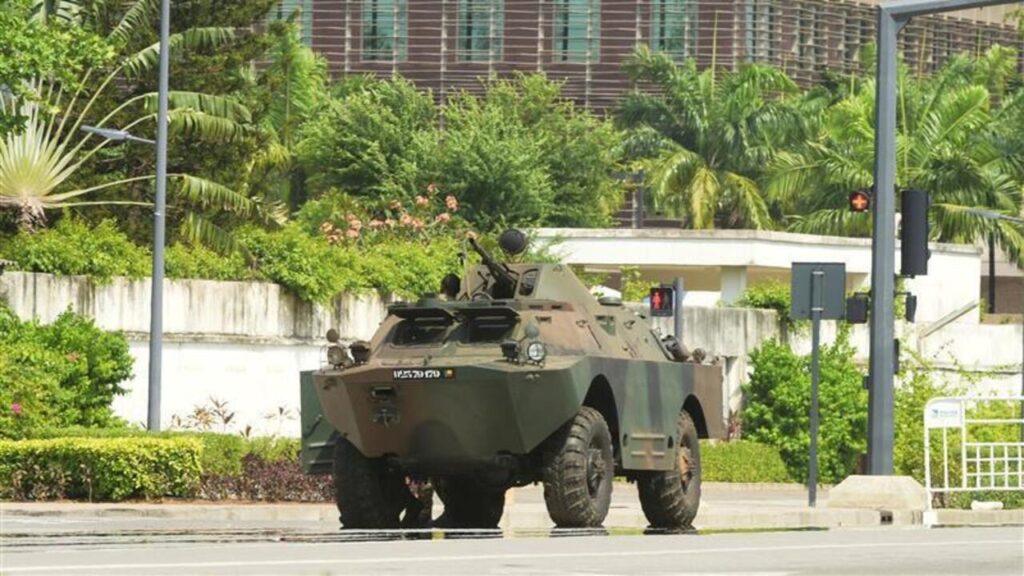
The deployment comes at a critical moment, just hours after an unexpected announcement on national television by a group of soldiers who declared that they had suspended the country’s constitution. The group also announced the closure of all land borders and airspace, signaling a complete disruption of constitutional rule. In the broadcast, the soldiers proclaimed that President Patrice Talon had been removed from office.
The military officers further revealed the establishment of a transitional governing body known as the Military Transition Council, which will be headed by Lieutenant-Colonel Tigri Pascal. The council claimed that its actions were motivated by widespread dissatisfaction with President Talon’s leadership, which they argued had strained national unity and governance.
Experts note that the situation in Benin reflects growing concerns about democratic backsliding and instability in parts of West Africa, where several countries have recently experienced military takeovers. ECOWAS, which has taken a firmer stance in recent years against unconstitutional changes of government, reiterated its commitment to protecting democratic frameworks across the region.
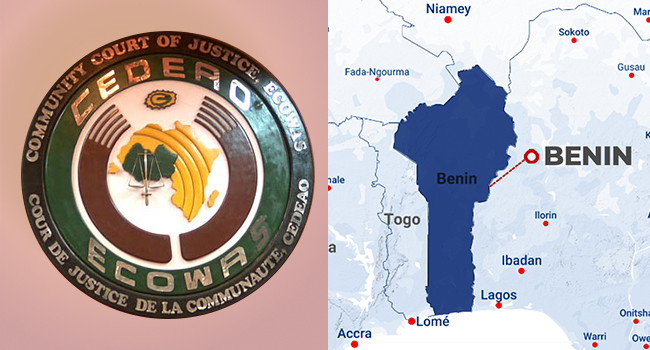
In its communiqué, the regional body emphasized that it will continue to monitor the situation closely and provide additional updates as developments unfold. ECOWAS also encouraged diplomatic engagement alongside the military presence, stressing the importance of collaboration with both Benin’s civilian institutions and security forces.
As tensions continue to rise, the deployment marks one of ECOWAS’s most decisive recent interventions and signals the bloc’s determination to reverse the political impasse in Benin. Regional and international observers are watching closely, awaiting further information on the mission’s mandate and the steps that will follow in the coming days.