

Member of Parliament for Ayawaso West Wuogon and Deputy Minister of Food and Agriculture, John Setor Dumelo, has announced a new initiative aimed at improving child nutrition and supporting local industry within his constituency.
In a statement released on Thursday, February 19, Mr Dumelo revealed that effective March 2, 2026, pupils in Class 1 to Class 4 across all public basic schools in Ayawaso West Wuogon will receive free Ghana-made cocoa drinks once a week until the end of the academic year.

According to the MP, the programme is designed to enhance the health and academic performance of young learners. He emphasised that cocoa is rich in essential nutrients such as antioxidants, iron and magnesium — all of which are vital for cognitive development and sustained energy levels in children.
“Cocoa serves as a highly nutritional powerhouse, especially for growing children,” the statement noted, stressing the link between proper nutrition and improved classroom performance.
By introducing a weekly cocoa supplement, the initiative aims to ensure that pupils are better nourished, more attentive and more prepared to engage in lessons. Education experts have long maintained that adequate nutrition plays a crucial role in learning outcomes, concentration and overall school participation.
Beyond improving child welfare, the initiative also seeks to strengthen the local economy. Mr Dumelo indicated that the cocoa drinks will be sourced exclusively from Ghanaian producers, ensuring direct support for local farmers and manufacturers.
Ghana remains one of the world’s leading cocoa producers, and promoting the consumption of locally processed cocoa products aligns with broader efforts to add value to raw materials within the country.
By prioritising Ghana-made goods, the programme is expected to contribute to job creation, boost local production and encourage national pride among pupils who consume products cultivated and manufactured locally.
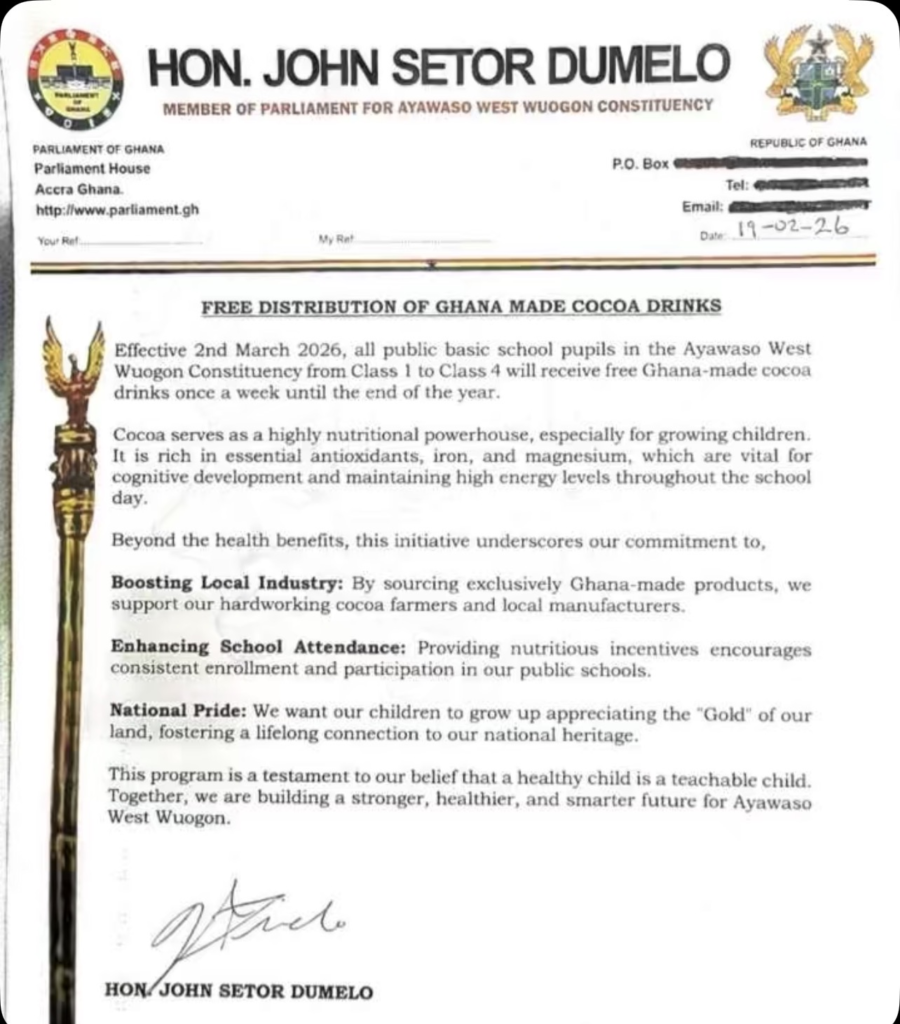
The MP also highlighted the potential impact of the initiative on school attendance. Providing nutritious incentives, he explained, can encourage regular participation and reduce absenteeism, particularly in public schools where families may face economic challenges.
Parents and guardians within the constituency have welcomed the move, describing it as a practical step toward improving both health and education outcomes.
The free cocoa programme reflects a growing trend of constituency-based interventions that combine agriculture, education and social support. As implementation begins in March, stakeholders will be watching closely to assess its impact on student well-being and academic engagement.
If successful, the initiative could serve as a model for similar programmes in other constituencies, demonstrating how targeted local action can contribute to national development goals.