
The legal battle over the extradition of former Microfinance and Small Loans Centre (MASLOC) Chief Executive Officer, Sedinam Tamakloe-Attionu, reaches a critical turning point on Wednesday, January 21, 2026, as she appears before a United States court.
The hearing could determine whether she will be returned to Ghana to serve a 10-year prison sentence imposed after her conviction in absentia by an Accra court in April 2024.
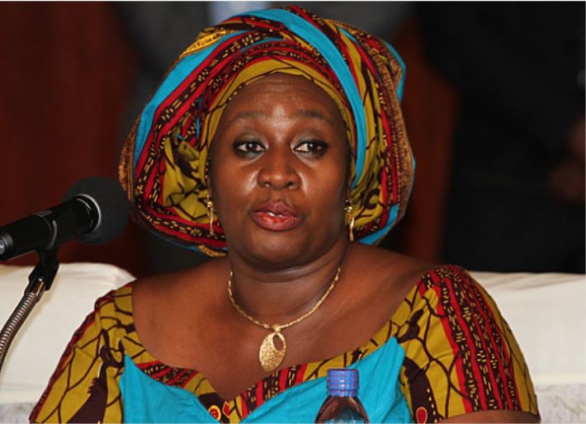
Tamakloe-Attionu was found guilty on 78 counts, including stealing, money laundering, and procurement breaches, following investigations into large-scale financial irregularities at MASLOC. Her conviction forms the basis of Ghana’s formal extradition request, initiated by the Attorney General in 2024.
The case comes barely a day after former Finance Minister Ken Ofori-Atta appeared in a Virginia immigration court, creating an unusual convergence of high-profile Ghanaian legal matters in the United States. While Ofori-Atta’s situation is being handled as an immigration issue, Tamakloe-Attionu’s case is a full criminal extradition proceeding under international law.
Ghana’s Ambassador to the United States, Victor Smith, confirmed the court date after reports emerged questioning her location. According to him, Tamakloe-Attionu is currently being held at the Nevada Southern Detention Centre in Pahrump.
“I have heard from official sources that this lady is being kept, and that she’s going to go to court on the 21st,” the ambassador stated. He added that she was arrested by U.S. Marshals following Ghana’s extradition request and that consular access has so far been restricted.
The Government of Ghana alleges that Tamakloe-Attionu played a central role in a scheme that caused a financial loss of nearly GH¢93 million to the state. Evidence presented during the 2024 trial by the Economic and Organised Crime Office (EOCO) included the alleged personal appropriation of a GH¢500,000 refund from Obaatanpa Micro-Finance, inflated vehicle procurement costs, and the diversion of funds meant for nationwide programmes. Her former deputy, Daniel Axim, was sentenced to five years in prison for his role in the case.
Legal observers have also noted a discrepancy in the spelling of her surname in official documents, a detail her defence team could raise during the identity verification stage of the extradition process. While such variations are usually insufficient to derail proceedings, they could prolong hearings through demands for stricter proof of identity.

Her lawyers are also expected to rely on medical and due process arguments, maintaining that she remained in the United States for health reasons after being granted court leave in 2021 and that her trial in absentia violated her right to a fair hearing.
As the U.S. court weighs these arguments against the requirements of the 1931 U.S.-UK Extradition Treaty, the outcome will carry significant implications. For Ghana, a successful extradition would reinforce efforts under the Operation Recover All Loots initiative. For the wider international community, it will test the balance between accountability, sovereignty, and individual rights in cross-border justice.