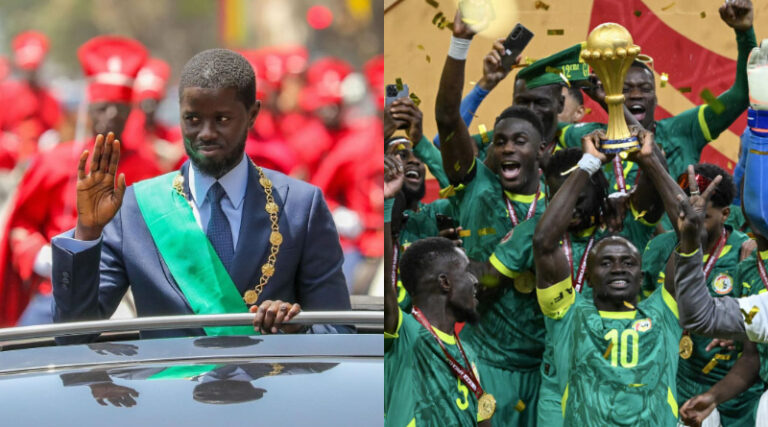
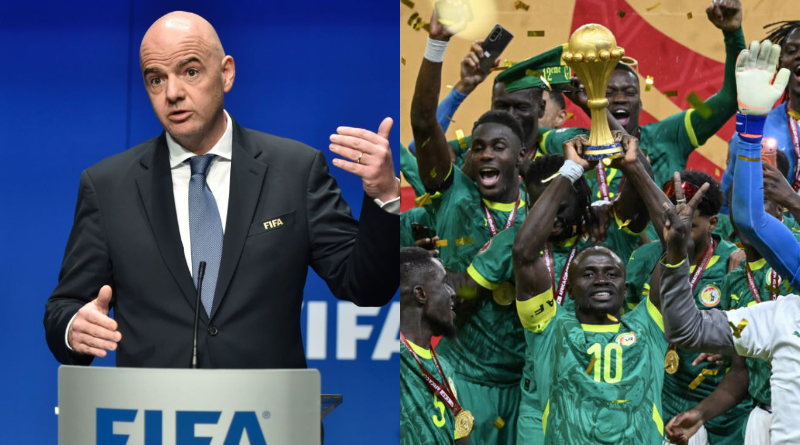
FIFA President Gianni Infantino has strongly condemned the chaotic scenes that disrupted the 2025 Africa Cup of Nations (AFCON) final in Rabat, following a controversial late penalty decision that triggered protests, a temporary walk-off by Senegalese players, and clashes in the stands.
The dramatic incident occurred in second-half stoppage time of the final between Senegal and host nation Morocco at the Prince Moulay Abdellah Stadium. Congolese referee Jean-Jacques Ndala awarded a penalty to Morocco after a lengthy Video Assistant Referee (VAR) review of a challenge by Senegal defender El Hadji Malick Diouf on Moroccan forward Brahim Diaz.
The decision immediately sparked intense reactions. Diaz led strong appeals from the Moroccan players, with members of the Moroccan bench joining in the protests. On the opposite side, Senegal players reacted angrily, disputing the call and questioning the referee’s judgment. Several Senegal players subsequently walked off the pitch in protest, bringing the match to a standstill.
The disruption spilled into the stands, where tensions among supporters escalated into clashes, forcing officials to halt the match for approximately 20 minutes as security worked to restore order. The scenes were broadcast live to millions of viewers across Africa and beyond, drawing widespread criticism.
Speaking after the match, Morocco head coach Walid Regragui expressed frustration over the prolonged stoppage, describing the episode as embarrassing for African football.
“Having to stop the game for more than 10 minutes with the world watching is not very classy,” Regragui said, despite his team being awarded the penalty.
Senegal head coach Pape Thiaw later apologised for the conduct of his players, acknowledging that emotions ran high in the heat of the moment but conceding that their reaction was inappropriate.
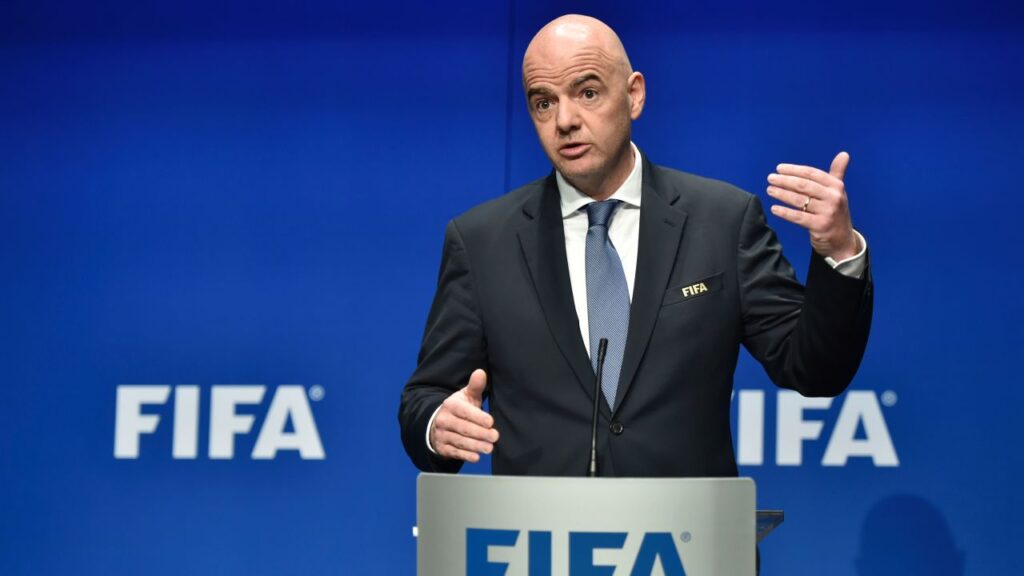
FIFA President Gianni Infantino, who was present at the stadium for the final, issued a firm statement condemning the behaviour witnessed during the incident.
“We strongly condemn the behaviour of some ‘supporters’ as well as certain Senegalese players and technical staff members,” Infantino said. “It is unacceptable to leave the field of play in this manner.”
While condemning the unrest, Infantino also praised Morocco for successfully hosting the tournament and commended the team’s performance as runners-up, describing it as a positive sign ahead of the country’s role as a co-host of the 2030 FIFA World Cup.
However, he stressed that respect for match officials and the Laws of the Game must remain paramount, regardless of the stakes.
“We must always respect the decisions taken by the match officials on and off the field of play,” Infantino stated. “Teams must compete on the pitch and within the Laws of the Game, because anything less puts the very essence of football at risk.”
Highlighting the broader implications of such incidents, the FIFA president underscored the responsibility of players and teams to set positive examples for fans.
“It is the responsibility of teams and players to act responsibly and set the right example for fans in the stadiums and millions watching around the world,” he added. “The ugly scenes witnessed today must be condemned and never repeated. They have no place in football, and I expect that the relevant disciplinary bodies at CAF will take the appropriate measures.”
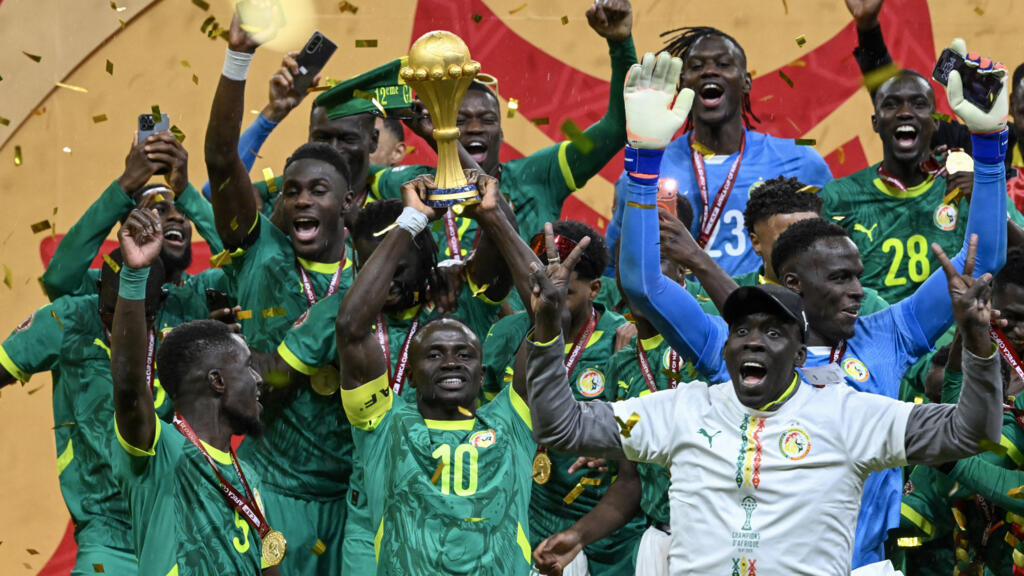
After order was restored, the match resumed. Morocco’s hopes were dashed when Brahim Diaz failed to convert the penalty, with Senegal goalkeeper Edouard Mendy producing a calm save. The reprieve proved decisive, as Senegal regrouped and went on to secure victory in extra time through a goal from Pape Gueye.
Gueye’s strike sealed a dramatic 1–0 win for Senegal, earning them their second AFCON title and sparking celebrations across the country. However, the controversy surrounding the final has continued to dominate post-match discussions, raising questions about officiating, player conduct, and crowd control at major tournaments.
As CAF reviews the incident, the AFCON 2025 final is likely to be remembered not only for Senegal’s triumph but also for the disorder that threatened to overshadow one of African football’s biggest occasions.