

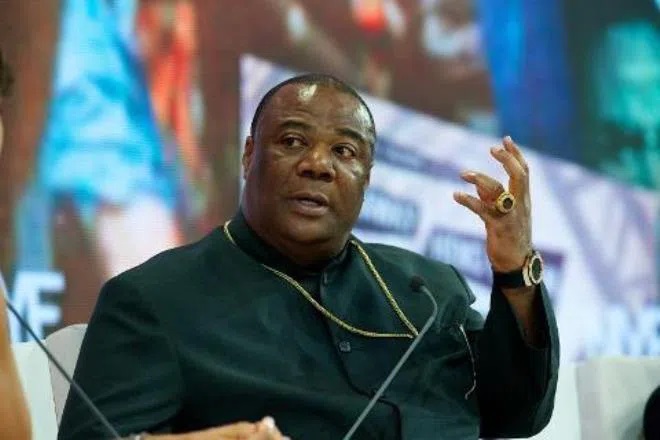
Archbishop Nicholas Duncan-Williams, Founder and General Overseer of Action Chapel International, has cautioned young couples against beginning married life under the weight of debt, warning that extravagant weddings often create unnecessary financial stress and long-term challenges.
Delivering a passionate message during a church service, the respected cleric criticised what he described as an unhealthy obsession with lavish white weddings and grand receptions. According to him, many couples prioritise impressing guests over preparing for the realities of marriage, only to suffer the consequences shortly after the celebrations end.

The Archbishop observed that it has become common for couples to spend far beyond their means on weddings, borrowing money or relying on unpaid services just to stage an elaborate ceremony. He warned that such decisions often rob marriages of peace from the very beginning.
Painting a vivid picture, he described newlyweds returning from their honeymoon only to be greeted by persistent phone calls from creditors demanding payment for chairs, drinks, decorations, and other wedding-related services. He noted that these pressures quickly erode the joy, unity, and spiritual focus that should define the early days of marriage.
Archbishop Duncan-Williams stressed that churches must take responsibility by discouraging weddings unless couples are financially prepared. In his view, marriage should not begin with unpaid bills, mounting pressure, and constant anxiety over money.
“Love alone cannot sustain a household,” he emphasised, explaining that affection does not pay rent, settle electricity bills, or put food on the table. Financial stability, he argued, is a critical foundation for a successful marriage.
To reinforce his point, the Archbishop suggested a minimum financial benchmark, stating that churches should discourage weddings unless a man can demonstrate a reasonable level of savings. He controversially proposed GH¢100,000 as a benchmark, explaining that it would help ensure basic financial readiness before embarking on marriage.
He also called on families and friends to stop sponsoring expensive weddings for couples who lack the means to support themselves. According to him, such assistance often enables poor financial decisions and creates unrealistic expectations, rather than empowering young couples to build stable homes.
In his view, weddings are liabilities for young people who are still struggling financially and should only be lavish affairs for individuals who are already well-established. He urged couples to separate the concept of marriage from the spectacle of weddings.
As an alternative, Archbishop Duncan-Williams proposed simpler church ceremonies, suggesting that couples could be joined during Sunday services without elaborate receptions, bridal parties, or expensive attire. Exchanging vows, receiving prayers, and beginning life together, he said, should matter more than impressing guests.
Addressing single women directly, the Archbishop encouraged them to prioritise finding responsible and prepared partners over the desire for a white dress or public celebration. Marriage, he stressed, is about companionship, responsibility, and building a future together—not hosting costly events.
Concluding his message, Archbishop Duncan-Williams described the fixation on extravagant weddings as a damaging mindset that has left many young families financially strained. He urged couples to rethink their priorities, focus on stability, and avoid turning what should be a joyful union into a lifelong financial burden.