Former Ghana Football Association (GFA) President Kwesi Nyantakyi has disclosed that he was firmly positioned to become President of the Confederation of African Football (CAF) before his exit from football administration in 2018, a development he believes cost Ghana a historic opportunity.
Speaking in an interview on Joy News on Tuesday, January 6, Nyantakyi explained that his position as First Vice President of CAF at the time placed him next in line for the continent’s most powerful football role.
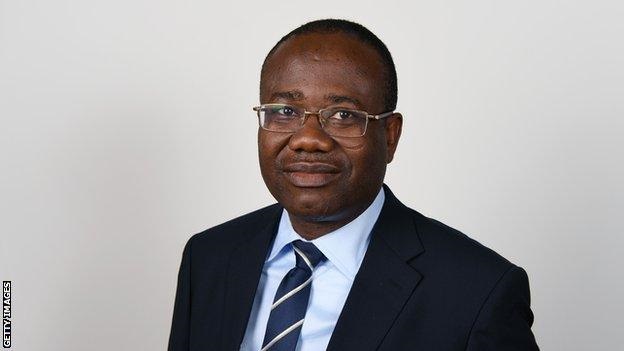
According to him, his seniority within CAF’s leadership hierarchy meant that he was well positioned to assume the presidency should the opportunity have arisen.
“It was very possible. At the time I exited CAF and football, I was the first vice president of the federation,” Nyantakyi said. “That meant I was the next most senior football official on the continent of Africa.”
Nyantakyi’s revelation has reignited public discussion about what might have been one of Ghana’s most significant achievements in football governance. He noted that his departure effectively closed the door on Ghana producing a CAF president at that time, a position that would have enhanced the country’s influence in African football decision-making.
“So, Ghana would have had a CAF president,” he stated. “Although it is still possible… anybody who works hard can be the president.”
Kwesi Nyantakyi served as President of the GFA from 2005 until his resignation in June 2018. During his tenure, Ghana enjoyed notable success in international football, including multiple Africa Cup of Nations appearances and strong performances at the FIFA World Cup. His rise within CAF and FIFA circles was widely seen as a reflection of his growing influence on the continental and global football stage.
However, Nyantakyi’s football administration career came to an abrupt end following corruption allegations that emerged from an investigative documentary in 2018. The exposé triggered widespread backlash and ultimately led to his resignation from his roles at the GFA, CAF, and FIFA. The controversy also plunged Ghanaian football into a period of reform and restructuring.
Despite the circumstances surrounding his exit, Nyantakyi maintains that his experience highlights the importance of strategic positioning, credibility, and long-term commitment in football administration. He expressed optimism that Ghana could still produce a CAF president in the future if administrators are given the opportunity to rise through the ranks.
His comments have sparked mixed reactions among football stakeholders, with some viewing them as a reflection on missed opportunities, while others see them as a reminder of the high standards required to sustain leadership roles at the continental level.
As African football continues to evolve, Nyantakyi’s reflections offer insight into the inner workings of CAF leadership and the impact that governance challenges can have on individual careers and national ambitions.