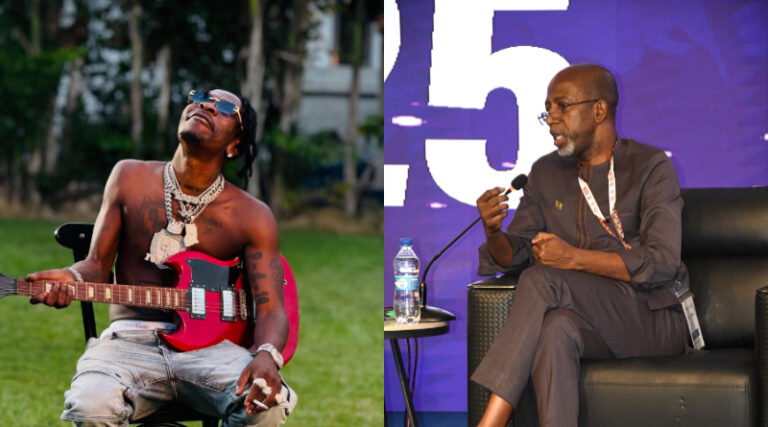

Highlife musician Terry Asamoah Boateng, widely known as Dada Hafco, has sparked widespread debate after boldly declaring that hiplife pioneer Reggie Rockstone has “created more jobs than any government in the Fourth Republic.”
His remarks were made during an interview on JoyPrime on Thursday, November 20, where he emphasised that Ghana has yet to fully recognise the magnitude of Reggie Rockstone’s contributions to the nation’s creative landscape.

According to Dada Hafco, the country’s appreciation for Reggie Rockstone remains far below what the icon deserves, despite the profound and far-reaching impact he has made since arriving in Ghana in the mid-1990s. He noted that although Reggie personally reached out to him after he shared an earlier tribute, the national acknowledgement of his legacy remains insufficient.
He argued that Reggie Rockstone’s introduction of hiplife in 1995, followed by the release of Agoro in 1996, opened a new and transformative economic frontier. This innovation gave rise to an entire creative ecosystem that previously had no established place in Ghana’s economy. For many young people—especially those without formal education—the rise of hiplife provided a career path, income, and a platform for self-expression that would have otherwise been out of reach.
“Look at the impact musicians have had on their families and on the economy. You can’t quantify it,” Dada Hafco stressed. “From Reggie’s time till now, look at the number of musicians who have passed through the system. Imagine if he hadn’t started the movement—where would all of us be?”
He went on to highlight the numerous job opportunities that emerged because of the hiplife revolution. These include:
- Bloggers and digital media teams who now travel with artistes
- Personal assistants, managers, and choreographers whose jobs once carried little prestige
- Dancers who were previously dismissed as doing “kubolor work”
- Creative entrepreneurs, producers, DJs, stylists, videographers, and performance directors
Dada Hafco explained that today’s creative industry is a respected sector, recognised in national budgets, featured in policy discussions, and acknowledged as a key contributor to Ghana’s economy. All of this, he insisted, sits on the foundation that Reggie Rockstone laid.
“We haven’t given Reggie Rockstone his flowers. In fact, we need to give him a whole garden,” he said passionately. “He is the Chuck D of our industry.”
He condemned the rising trend of disrespect toward Reggie by some younger artistes, saying such attitudes ignore the sacrifices and opportunities he created for the entire industry.

Drawing inspiration from comments once made by American producer Swizz Beatz, who argued that hip-hop artistes should financially honour their pioneers, Dada Hafco said Ghana must adopt the same principle.
He went a step further, calling for national honours to be bestowed on Reggie Rockstone.
“Reggie must be called to Parliament or the seat of government one day and given the Order of the Volta or something. It has to happen.”
Dada Hafco’s comments add to the growing public appeal for Ghana to formally recognise the architects of its modern music industry—especially those whose vision shaped careers, industries, and entire cultural movements.