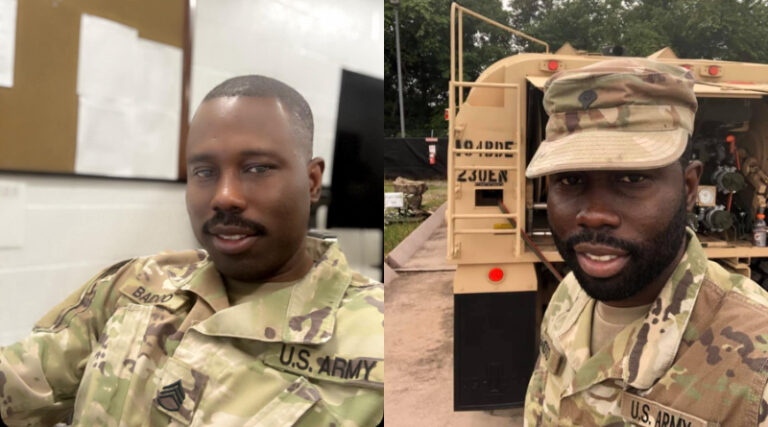
In the wake of the tragic stampede at a Ghana Armed Forces (GAF) recruitment exercise at the El-Wak Stadium in Accra — which claimed the lives of 6 young applicants — United States Army recruiter Jelvis Kwame Baidoo has made a powerful call for comprehensive reform of Ghana’s military recruitment system.
According to reports by OneKing Multimedia, the stampede occurred when thousands of hopeful candidates surged toward the gates during the 2025/2026 recruitment exercise. The tragic event left 6 people dead and dozens injured, sparking public outrage and calls for accountability.
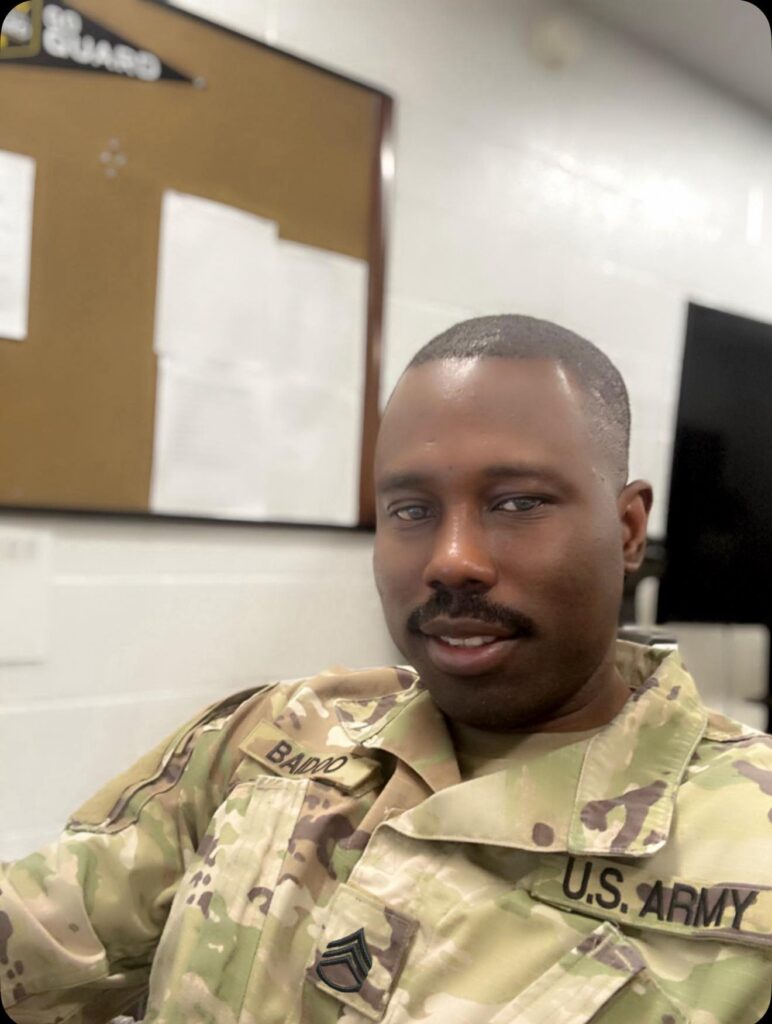
Drawing on his professional experience as a U.S. Army recruiter, Baidoo said he had “never heard of yearly recruitment” in his field and used the tragedy to emphasize the urgent need for reform. He stated that Ghana’s current system — which depends on fixed annual recruitment drives — is outdated, unsafe, and inefficient.
“The Government of Ghana should grant me the opportunity to handle the Armed Forces recruitment,” Baidoo declared. “And the whole world will see the difference.”
His remarks struck a chord with many Ghanaians, particularly the youth, who have long complained about the limited transparency and overwhelming crowds that characterize Armed Forces recruitment exercises.
Baidoo proposed that Ghana adopt a continuous, technology-based recruitment system, similar to what operates in the United States. There, military recruitment happens year-round through digital databases, local recruiting offices, and staggered training schedules that prevent overcrowding and ensure better candidate management.
He believes that adopting such a model would not only prevent tragic incidents like the El-Wak stampede but also strengthen the credibility and fairness of the Armed Forces’ enlistment process.
Security experts agree that the stampede has exposed weaknesses in Ghana’s recruitment infrastructure — including inadequate crowd control, poor logistics, and outdated communication strategies. They argue that a digital recruitment platform with automated scheduling and nationwide access could drastically reduce human error and risk.
Baidoo’s advocacy goes beyond logistics; it highlights the importance of leveraging Ghanaian talent in the diaspora. As a U.S. Army professional of Ghanaian origin, he represents a bridge between international best practices and Ghana’s national needs. His proposal is not just a critique but an offer of collaboration — a chance to blend patriotism with expertise.
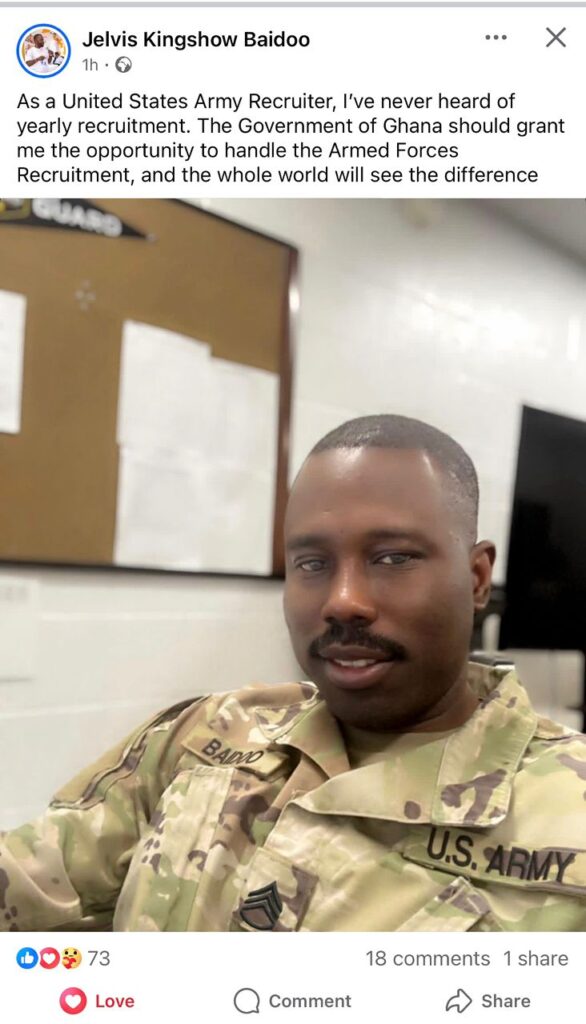
Public reaction to Baidoo’s post and the stampede has been swift and emotional. Many citizens have demanded a thorough investigation into the incident and immediate reforms. Others praised Baidoo’s courage for speaking up and offering practical solutions rooted in global experience.
If Ghana transitions from its traditional annual recruitment drives to a year-round, transparent, and merit-based system, it could save lives, improve morale, and restore public trust in its Armed Forces.
As Jelvis Kwame Baidoo continues to champion innovation, safety, and accountability, his voice adds urgency to a national issue that can no longer be ignored. The El-Wak tragedy stands as a painful reminder that reform is not optional — it is a moral imperative.